Selling and Marketing Expense is a financial concept covered in this article. Costs Incurred to Generate Sales and Promote Products/Services
Pennies don't fall from heaven, they have to be earned here on earth.
Selling and Marketing Expense (often abbreviated as S&M or SMX) represents the direct costs a company incurs to promote its products or services, acquire customers, and drive revenue growth. This operating expense line includes advertising, sales commissions, promotional campaigns, trade shows, digital marketing (SEO, PPC, social media), sales team salaries/benefits, travel for sales calls, and market research. Distinct from general & administrative costs, S&M is variable with sales volume and essential for top-line growth, especially in consumer goods, tech, retail, and B2C businesses. High S&M can pressure margins short-term but is critical for market share gains and customer acquisition.
What is Selling and Marketing Expense?
Selling and Marketing Expense captures all costs directly tied to sales generation and brand promotion. It is a core component of SG&A (Selling, General & Administrative) but broken out separately in detailed income statements to highlight revenue-driving investments.
Selling costs focus on the sales function (commissions, salaries, travel), while marketing costs emphasize promotion (ads, events, digital campaigns). Under US GAAP and IFRS, these are expensed as incurred unless qualifying for capitalization (rare).
S&M is variable and scalable—grows with revenue ambitions but must yield positive ROI via customer lifetime value exceeding CAC.
“Pennies don’t fall from heaven, they have to be earned here on earth.”
— Margaret Thatcher, Prime Minister of the United Kingdom (1979-1990) Speech at Lord Mayor’s Banquet, London (1979)
Breakdown of Common Components
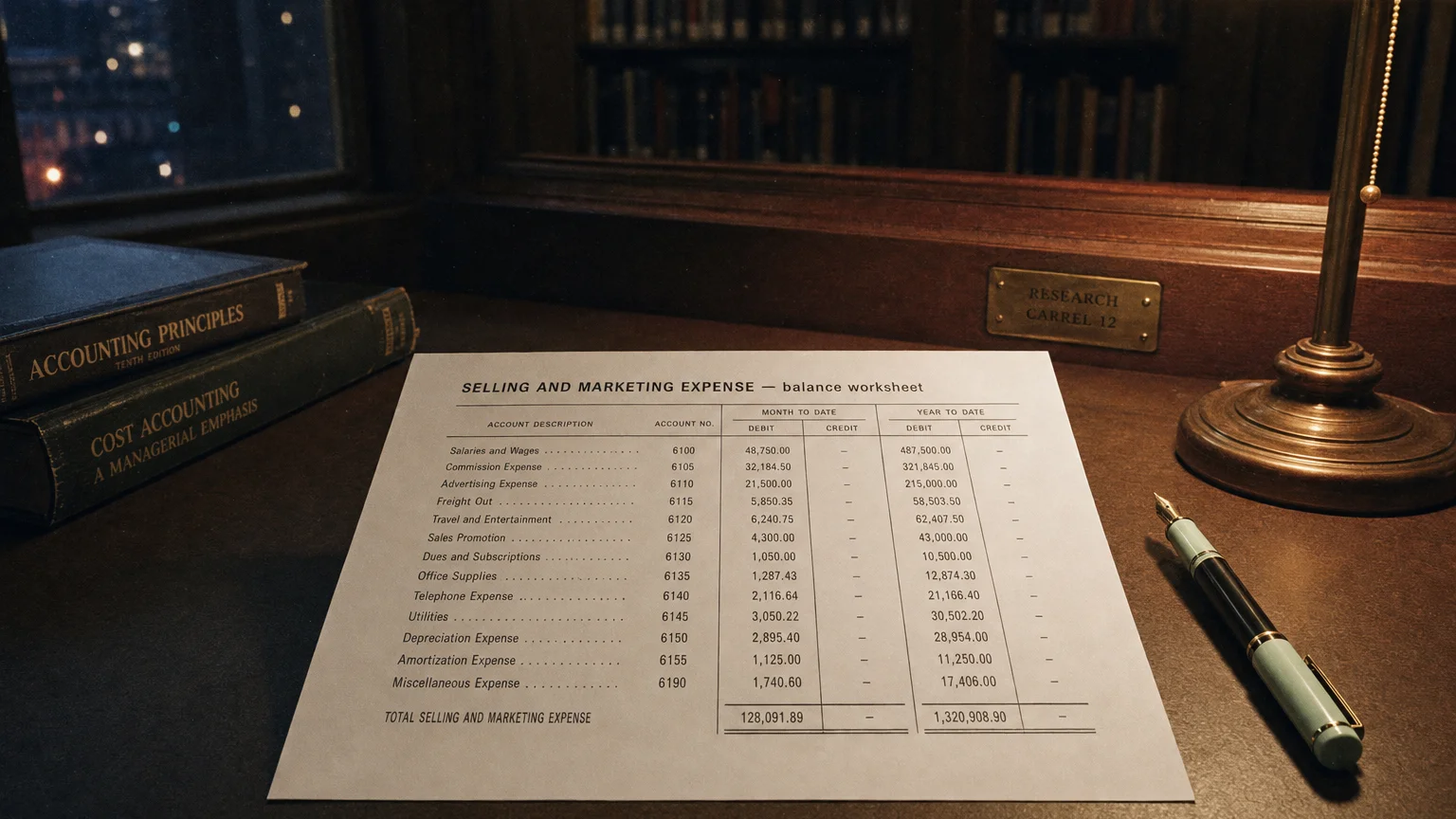
Typical items within Selling and Marketing Expense:
Key Categories
- Advertising & Promotion: TV/radio/print ads, online PPC/SEO, social media campaigns
- Sales Commissions & Incentives: Variable pay tied to quotas (10-20% of sales)
- Sales Salaries & Benefits: Base pay for sales reps, managers
- Marketing Salaries: Brand managers, digital specialists
- Trade Shows & Events: Booth fees, sponsorships, demos
- Travel & Entertainment: Sales calls, client dinners (pre-COVID higher)
- Market Research: Surveys, focus groups, analytics tools
- Direct Mail/Catalogs: Print/digital collateral
- Branding/Collateral: Website, brochures, packaging
Digital shift has boosted online ads (Google, Meta, programmatic) over traditional media.
How Selling and Marketing Fits in the Income Statement
Standard placement:
Formula: Operating Expenses = Cost of Revenue
- Research & Development (R&D)
- Selling & Marketing
- General & Administrative (G&A)
- Depreciation & Amortization
Operating Income = Revenue − Operating Expenses (including S&M). High S&M reduces margins but drives revenue growth.
Tip: Track S&M as % of revenue and revenue growth for payback period (months to recoup spend).
Examples
Example 1: Tech SaaS Company
Annual revenue $500M.
Digital ads (Google/FB): 60M Sales/marketing salaries: 15M Selling & Marketing Expense: $200M (40% of revenue—typical for high-growth SaaS).
Example 2: Consumer Goods
Revenue $2B.
TV/digital ads: 180M Sales force: 30M Selling & Marketing Expense: $580M (29% of revenue).
SaaS/tech: 30-50% of revenue; mature CPG: 20-30%; B2B industrial: 5-10%.
Importance in Financial Analysis
S&M analysis reveals:
- Growth investment: High % signals aggressive expansion (Amazon early days 30%+)
- Efficiency: Marketing ROI (revenue / spend), CAC payback (<12 months ideal)
- Scalability: S&M growth slower than revenue = leverage
- Competitive moat: Low S&M % may indicate strong brand/pull
Rule of 40 (SaaS): Revenue growth % + EBITDA margin % >40%; balances growth spend.
Warning: Sudden spikes without revenue lift may indicate desperation or inefficiency.
Q · 01 What is Selling And Marketing Expense? +