
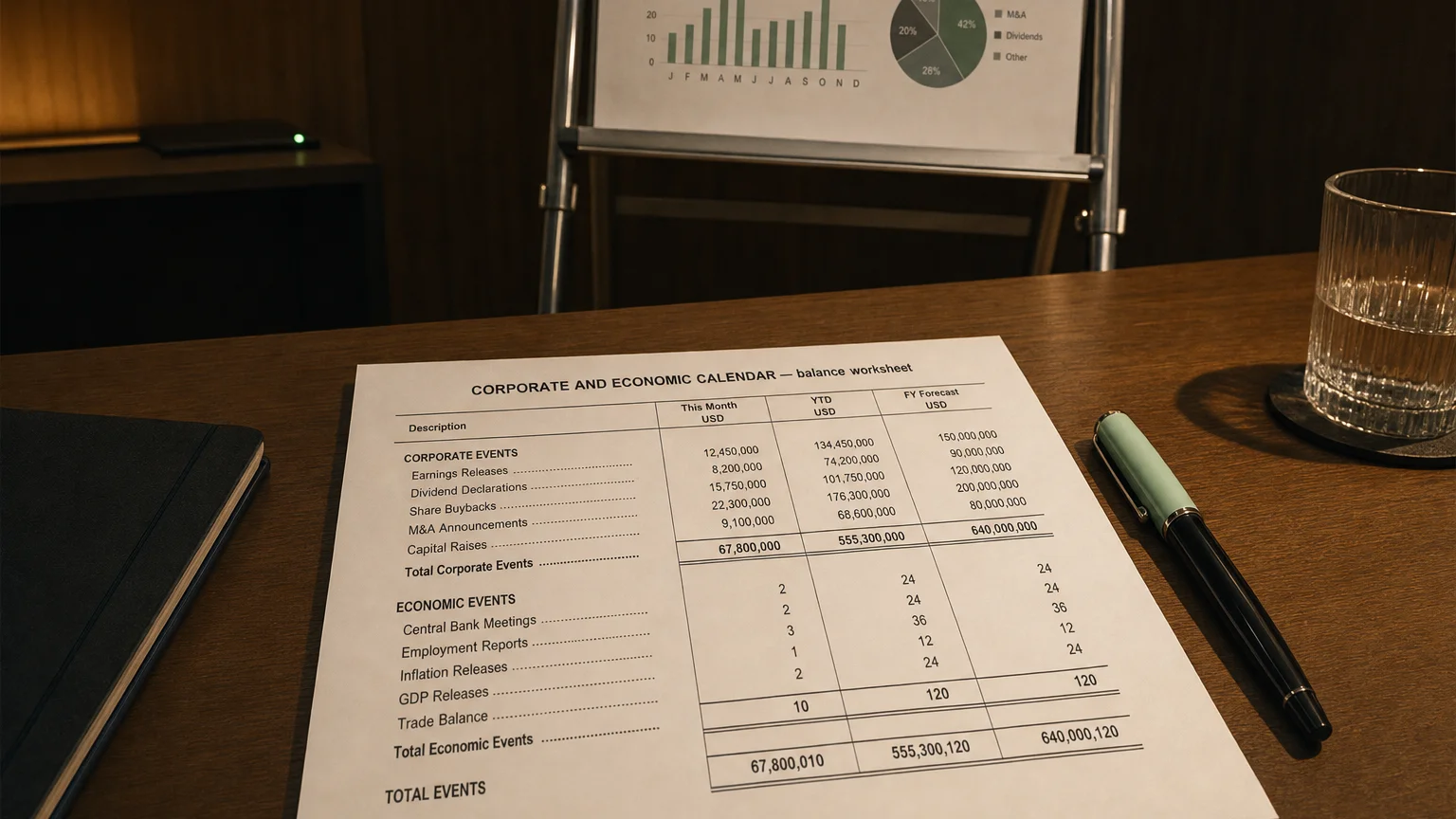
A corporate and economic calendar is a schedule of market-moving events, including company earnings reports, central bank interest rate decisions, and key data releases like CPI and GDP. Investors use it to anticipate volatility, manage risk, and identify trading opportunities.
The stock market is a device for transferring money from the impatient to the patient.

In the world of finance, timing isn’t just important—it’s everything. An Economic or Corporate Calendar is an indispensable tool for investors and traders, acting like a roadmap of future events that can shake up the markets. Think of it as a weather forecast for the financial world. It doesn’t tell you with 100% certainty if it will rain, but it warns you to bring an umbrella. By tracking key dates for company announcements, economic data releases, and government policy meetings, you can anticipate periods of high volatility and make much more informed decisions.
What’s On The Calendar? The Two Main Types
Financial calendars aren’t just one single thing; they are typically broken down into two essential categories that cover the micro (company-specific) and macro (economy-wide) picture.
1. Corporate Calendar (The Company’s Story)
- Earnings Reports: This is the big one. Every quarter, public companies must report their financial performance (revenue, profit, etc.). This is the company’s ‘report card’ and can cause massive stock price swings.
- Dividend Dates: Key dates for dividend investors, including the declaration date, ex-dividend date, and payment date.
- Shareholder Meetings: Annual meetings where major company decisions are voted on.
- Stock Splits: Announcements about a company splitting its shares, which can impact liquidity and investor perception.
- Analyst Days & Product Launches: Events where the company presents its strategy or unveils new products, giving clues about future growth.
2. Economic Calendar (The Big Picture Story)
- Central Bank Meetings (e.g., The Fed): Meetings of central banks like the U.S. Federal Reserve to decide on interest rates. This is arguably the most powerful driver of the entire market.
- Inflation Data (CPI, PPI): The Consumer Price Index (CPI) and Producer Price Index (PPI) measure inflation. High inflation can lead central banks to raise interest rates, which is often bad for stocks.
- Employment Reports (Jobs Report): Data on unemployment rates and job creation. A strong job market can signal a healthy economy, but also potential inflation.
- GDP Reports: The Gross Domestic Product (GDP) report measures the total economic output of a country. It’s the broadest measure of economic health.
- Consumer Sentiment & Retail Sales: These reports give a sense of the consumer’s confidence and spending habits, which is crucial since consumer spending is a huge part of the economy.
“The stock market is a device for transferring money from the impatient to the patient.”
— Warren Buffett, Chairman & CEO, Berkshire Hathaway Berkshire Hathaway Annual Report (1999)
Why the Calendar is Your Best Friend: The Strategic Importance
Ignoring the calendar is like sailing without a map or a weather forecast—you might be fine, but you’re exposing yourself to completely avoidable storms. Professionals use the calendar for several key strategic reasons.
Key Strategic Uses
- Volatility & Risk Management: The calendar tells you when periods of high volatility are likely to occur. Many traders will reduce their position sizes or avoid opening new trades right before a major announcement like an earnings report or a Fed interest rate decision.
- Informed Decision Making: Knowing that a key inflation report is coming out tomorrow might stop you from panic-selling on a random market dip today. It provides context for market movements.
- Identifying Trading Opportunities: Many strategies are built entirely around scheduled events. For example, some traders specialize in ‘playing the earnings gap’ by buying or shorting a stock right after its quarterly report.
- Understanding Market Narrative: Watching how the market reacts to economic data helps you understand the current market narrative. For example, is good economic news being treated as good news (healthy economy) or bad news (the Fed might raise rates)? The calendar helps you decipher this.
The ‘Whisper Number’
For major events like earnings or inflation reports, there’s the official data, and then there’s the market expectation (the ‘whisper number’). Often, the market’s reaction is not based on the absolute number, but on how that number compares to the consensus forecast. A company reporting huge profits might still see its stock fall if those profits weren’t as huge as Wall Street expected. The calendar helps you track both the event and its forecast.
How to Use the Calendar in Your Analysis
Integrating the calendar into your routine is simple but transformative. It moves you from being a reactive investor to a proactive one.
A Practical Weekly Workflow
Q: Where can I find a reliable financial calendar?
Many excellent free resources are available. Reputable financial news websites like Bloomberg, Reuters, the Wall Street Journal, and platforms like Yahoo Finance, MarketWatch, and TradingView all provide high-quality, filterable economic and corporate calendars.
Q · 01 What is a corporate and economic calendar? +
Q · 02 How do investors use an economic calendar? +
Q · 03 What is the whisper number in earnings context? +