A comprehensive guide to a company's short-term debts and obligations due within one year, and their critical role in assessing liquidity and financial health.
The stock market is a device for transferring money from the impatient to the patient.

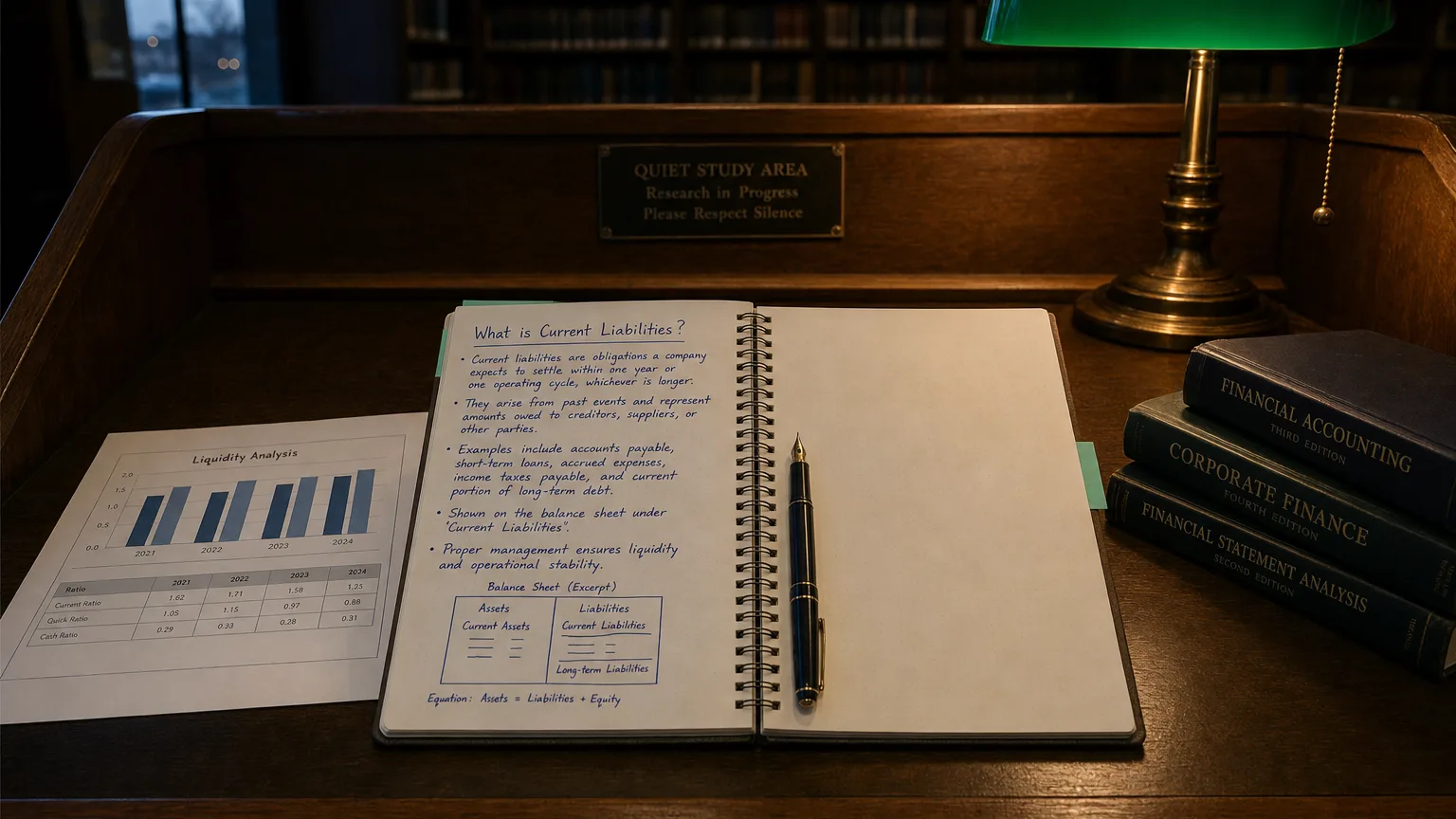
Current liabilities are the short-term debts or obligations of a company - essentially, money the company owes to others that must be paid within the next year. These liabilities are considered “current” because they are due in the near term (usually within 12 months of the balance sheet date). They typically arise from the day-to-day operations of the business and will be settled using the company’s current assets (like cash or inventory that will be turned into cash soon).
Why Current Liabilities Are Important
Current liabilities are a key factor in evaluating a company’s short-term financial health and liquidity. Investors and analysts look at current liabilities to gauge whether the company can meet its near-term obligations as they come due. Several important liquidity measures incorporate current liabilities:
- Working Capital: Calculated as , this metric indicates the cushion of short-term assets a company has. Positive working capital suggests the company can comfortably pay upcoming bills, while negative working capital is a warning sign of potential cash flow problems.
- Current Ratio: Calculated as , this ratio assesses if a company has enough current assets to cover its current liabilities. A ratio greater than 1 is generally preferred.
- Quick Ratio: Similar to the current ratio, but it excludes less liquid assets like inventory from current assets to provide a more stringent test of liquidity.
In short, current liabilities help stakeholders understand a company’s ability to pay its bills, making them an important component of credit analysis and financial stability evaluation.
Common Examples of Current Liabilities
“The stock market is a device for transferring money from the impatient to the patient.”
— Warren Buffett, Chairman & CEO, Berkshire Hathaway Berkshire Hathaway Annual Report (1999)
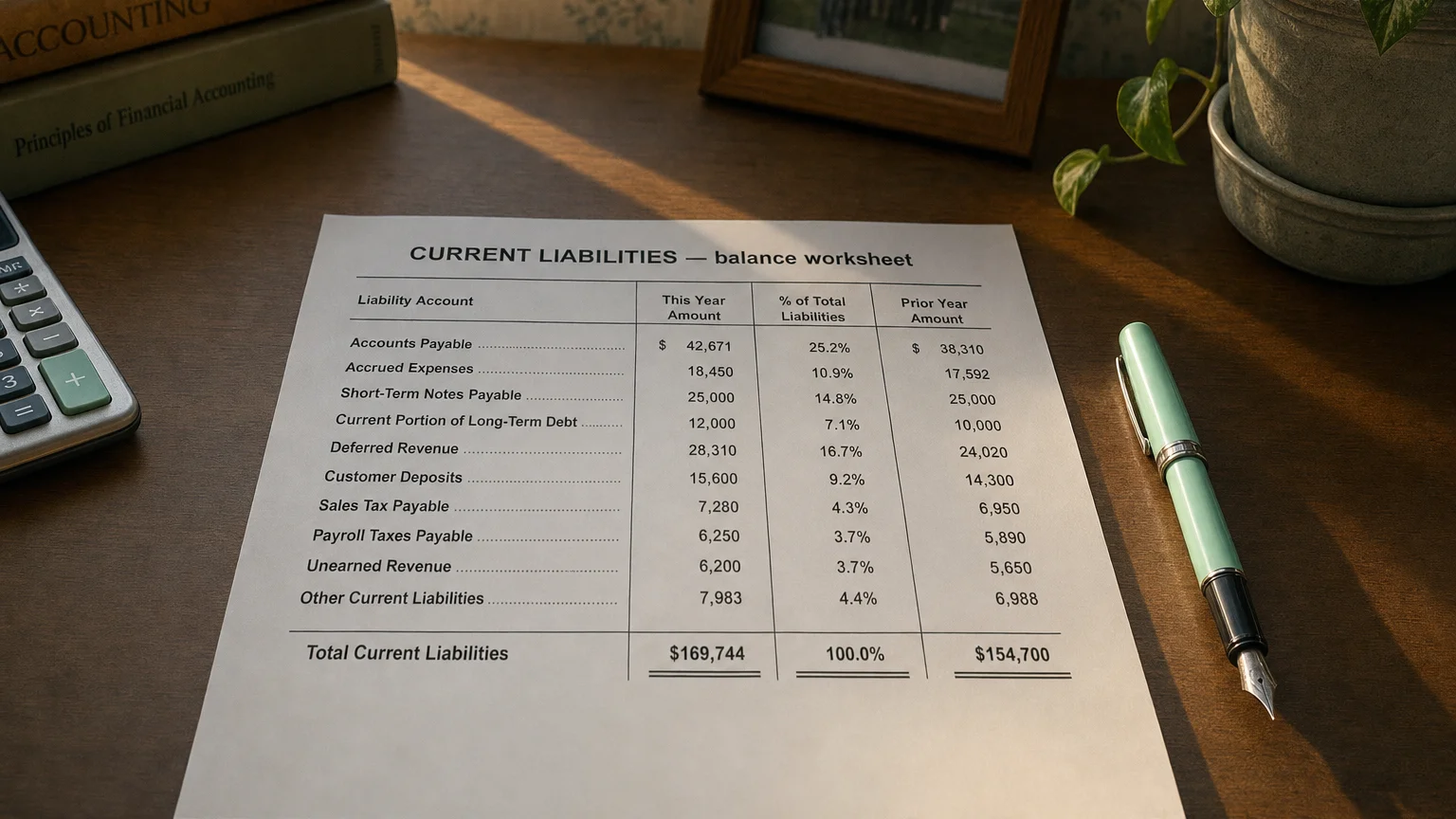
Current liabilities include a variety of short-term payables and accrued expenses that businesses encounter in normal operations:
- Accounts Payable (AP): Money owed to suppliers or vendors for goods and services received but not yet paid for. These are usually invoices due within 30 to 90 days.
- Short-Term Loans / Notes Payable: This includes any loans, bank lines of credit, or promissory notes that must be repaid within the next 12 months.
- Accrued Expenses: Expenses that have been incurred but not yet paid. Common examples include wages/salaries payable to employees and interest payable on loans.
- Taxes Payable: Any taxes owed to government authorities that are due within the year, such as income taxes, sales taxes, and payroll taxes.
- Unearned Revenue (Deferred Revenue): Money received from customers for goods or services that have not yet been delivered. This is a liability because the company owes the customer the product or service.
- Other Current Liabilities: A catch-all category that can include items like dividends payable (dividends declared but not yet paid to shareholders).
Current vs. Long-Term Liabilities
The primary difference between current and long-term liabilities is the time frame for repayment. Current liabilities are due within one year, whereas long-term (non-current) liabilities are due in more than one year.
The Current Portion of Long-Term Debt
A key concept is that the portion of a long-term loan that is due for repayment within the next 12 months is reclassified from long-term liabilities to current liabilities. For example, for a five-year bank loan, the upcoming year’s principal payments are shown as a current liability, while the rest remains as a long-term liability.
How Current Liabilities Are Presented on the Balance Sheet
On a classified balance sheet, liabilities are divided into ‘Current’ and ‘Long-Term’ sections for clarity. Current liabilities are usually presented first, often listed in order of their due dates.
Sample Balance Sheet Presentation
The liabilities section for ‘Example Corporation’ might look like this:
Current Liabilities:
- Short-term loans payable: $5,000
- Current portion of long-term debt: $15,000
- Accounts payable: $20,900
- Accrued expenses: $8,500
- Income taxes payable: $6,100
- Other accrued liabilities: $4,000
Total Current Liabilities: $61,000
This is followed by the Long-Term Liabilities section to arrive at Total Liabilities.
Q · 01 What is Current Liabilities? +