Gross Profit is a financial concept covered in this article. Profitability from Core Operations Before Overhead Costs
Pennies don't fall from heaven, they have to be earned here on earth.
Gross profit is a fundamental metric on a company’s income statement that reveals how much profit remains after accounting for the direct costs of producing the goods or services sold. It helps in understanding the profitability of a company’s core operations (before other expenses) and is widely used in financial analysis.
What Is Gross Profit?
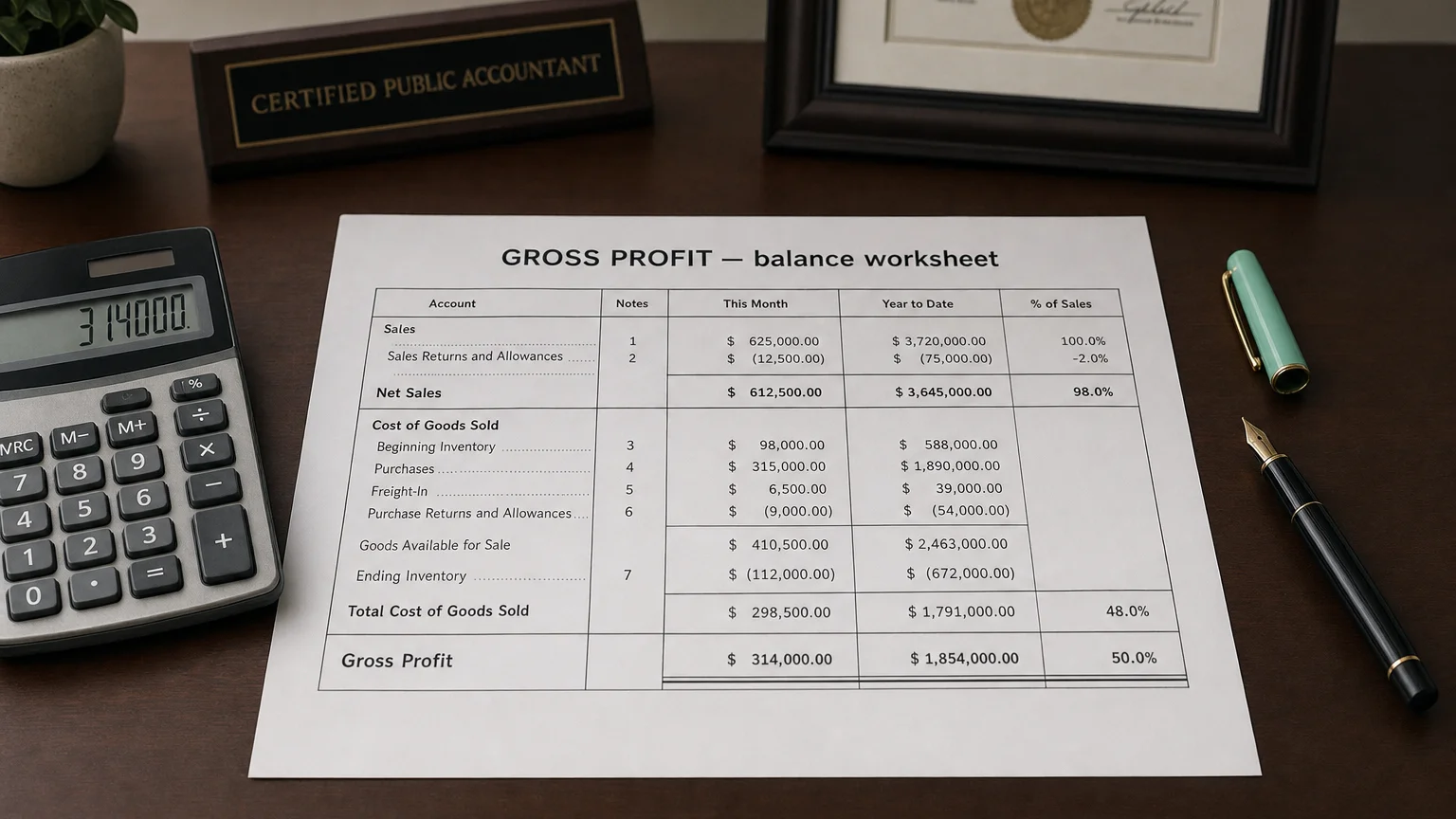
Gross Profit (also known as gross income or sales profit) is the profit a company earns after subtracting the cost of goods sold (COGS) from its total revenue. In other words, it represents the income left over from sales after the direct costs of producing those sales have been paid. These direct costs typically include expenses like raw materials and direct labor. Gross profit does not include other operating expenses, interest, or taxes—those costs are deducted later to arrive at operating profit and net profit. By focusing only on production costs, gross profit shows how profitable the company’s core activities are before overhead and other expenses.
How to Calculate Gross Profit
Calculating gross profit is straightforward. The formula is:
Formula: Gross Profit = Revenue (Net Sales) - Cost of Goods Sold (COGS)
- Revenue (Net Sales): This is the total sales generated by the company during a period, often called the ‘top line’. It is the total income from sales, often net of returns or discounts.
- Cost of Goods Sold (COGS): These are the direct costs of producing the products or services that were sold. This includes the cost of materials, direct labor, and other production-related costs.
“Pennies don’t fall from heaven, they have to be earned here on earth.”
— Margaret Thatcher, Prime Minister of the United Kingdom (1979-1990) Speech at Lord Mayor’s Banquet, London (1979)
Example Calculation of Gross Profit
To illustrate, consider a simple example where a company’s quarterly income statement reports the following:
Formula: Gross Profit = 75,000 (COGS) = $25,000
In this case, the company’s gross profit for the quarter is **25,000 from its core operations after paying for the direct production costs of the goods sold. This amount is now available to cover all other expenses like marketing, rent, and salaries.
Why Gross Profit Matters in Financial Analysis
Gross profit is a critical figure for analysts, investors, and managers because it provides insight into a company’s efficiency and core profitability.
- Indicator of Production Efficiency: Gross profit reflects how efficiently a company produces its goods or services. A higher gross profit suggests that the company has lower COGS and is more efficient in its operations.
- Pricing and Cost Management: It helps management assess if products are priced appropriately and if production costs are in line. A low gross profit might prompt a company to seek cheaper suppliers or improve manufacturing processes.
- Comparison and Trend Analysis: Investors use gross profit and the gross profit margin (Gross Profit / Revenue) to compare performance over time or against competitors. An improving trend is a positive sign of better cost control.
- Contribution to Overall Profitability: Gross profit is the money that remains to cover all other business expenses. A strong gross profit is essential for a company to achieve a healthy net income.
Gross Profit on the Income Statement
Gross profit typically appears as a distinct line item on a multi-step income statement, right after the revenue and cost of goods sold entries. By showing gross profit explicitly, the income statement helps readers see how much profit the company makes from its production activities alone.
Typical Placement
Revenue (Sales)
- Cost of Goods Sold = Gross Profit
- Operating Expenses = Operating Income
In this structure, Gross Profit provides a clear separation between the costs directly tied to sales and the other costs of running the business, allowing for a deeper insight into the company’s financial health.
Q · 01 What is Gross Profit? +