Other Inventories is a financial concept covered in this article. Miscellaneous Inventory Items Not Fitting Standard Categories
If we avoid the losers, the winners will take care of themselves.
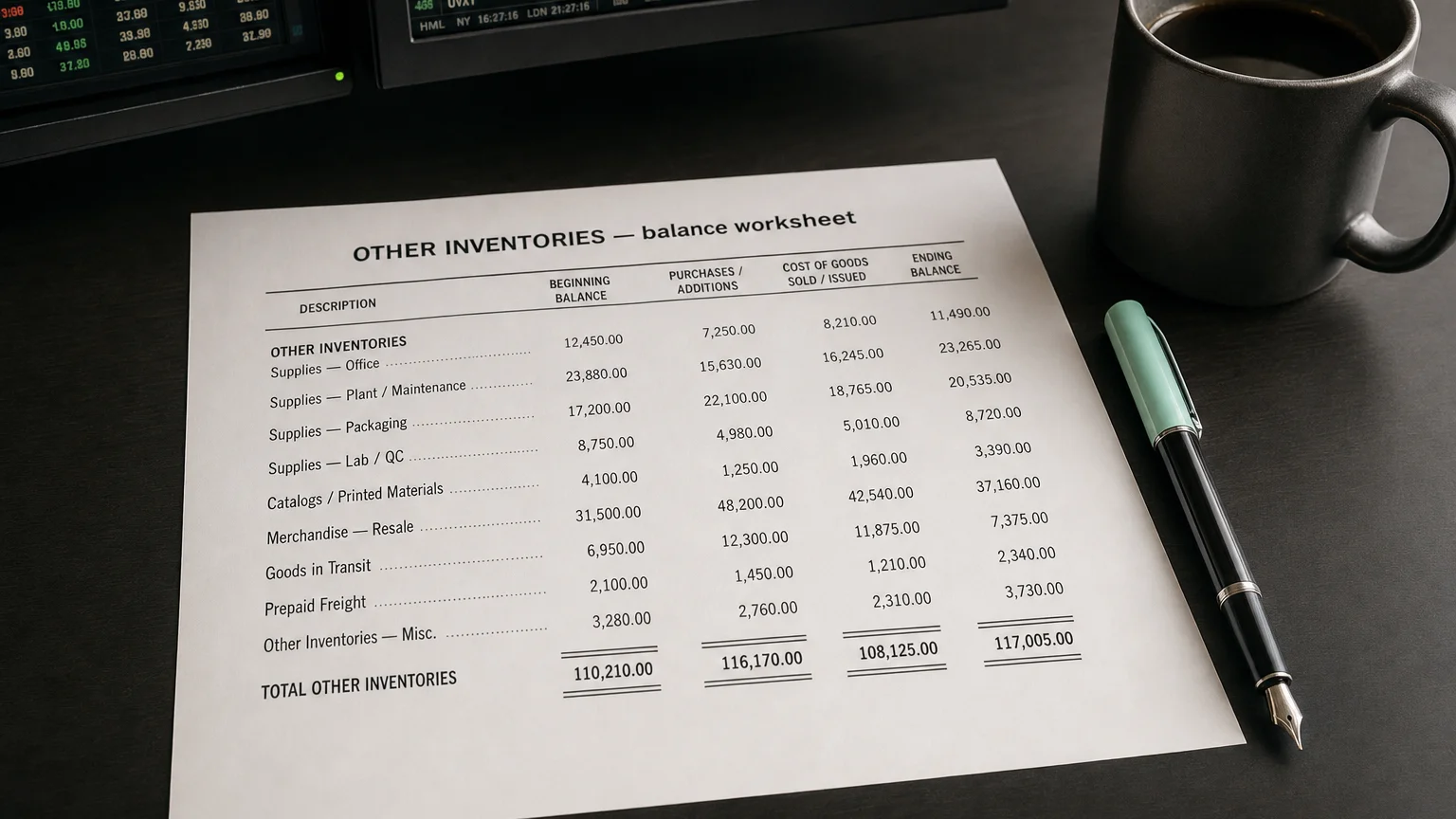
Other Inventories is a catch-all category on the balance sheet for inventory items that do not neatly fall into the primary classifications of raw materials, work in process, or finished goods. It includes supplies, spare parts, packaging materials, or other consumables used in operations but not directly incorporated into the final product sold to customers.
What Other Inventories Includes
Other Inventories captures items essential to operations but not part of the core product:
- Manufacturing supplies (lubricants, cleaning materials)
- Maintenance spare parts and tools
- Packaging and shipping materials
- Office or factory consumables
- Fuel or energy stocks
- Merchandise for resale (in non-retail primary business)
These are indirect—used up in production/support rather than becoming the sold product.
Sometimes called ‘Supplies Inventory’ or ‘MRO Inventory’ (Maintenance, Repair, Operations).
“If we avoid the losers, the winners will take care of themselves.”
— Howard Marks, Co-Chairman, Oaktree Capital Management Oaktree Memo: ‘The Most Important Thing’ (2003)
A Practical Example
A beverage bottler:
- Sugar, flavoring → Raw Materials
- Bottles half-filled → Work In Process
- Capped, labeled bottles → Finished Goods
- Cleaning chemicals, conveyor belts spares, cardboard cases → Other Inventories
The chemicals and cases support production but aren’t in the soda itself.
How Costs Flow
- Purchased and added to Other Inventories
- Expensed as used—typically through manufacturing overhead
- Not directly traced to COGS like direct materials
- Write-downs for obsolete spares
Consumption often estimated or via periodic counts.
Accounting Treatment
- Valued at lower of cost or net realizable value
- Cost methods: FIFO, average (LIFO less common)
- Physical inventory counts required
- Obsolescence reserves common (slow-moving spares)
Not part of prime product cost—usually overhead.
Balance Sheet Presentation
Under current assets → Inventory as:
- ‘Other Inventories’
- ‘Supplies’
- ‘Maintenance and Operating Supplies’
- Last line in inventory breakdown
Often smallest component unless heavy maintenance needs.
What to Look For
- Size relative to operations (high = heavy maintenance?)
- Growth trend (spares buildup = aging equipment?)
- Obsolescence reserve adequacy
- Industry comparison (capital-intensive higher)
- Working capital tie-up
Rising other inventories without explanation may signal inefficiency or excess spares.
Q · 01 What is Other Inventories? +