
An essential guide to a company's short-term borrowings and financial obligations that are due to be paid within one year.
In the short run, the market is a voting machine. In the long run, it is a weighing machine.

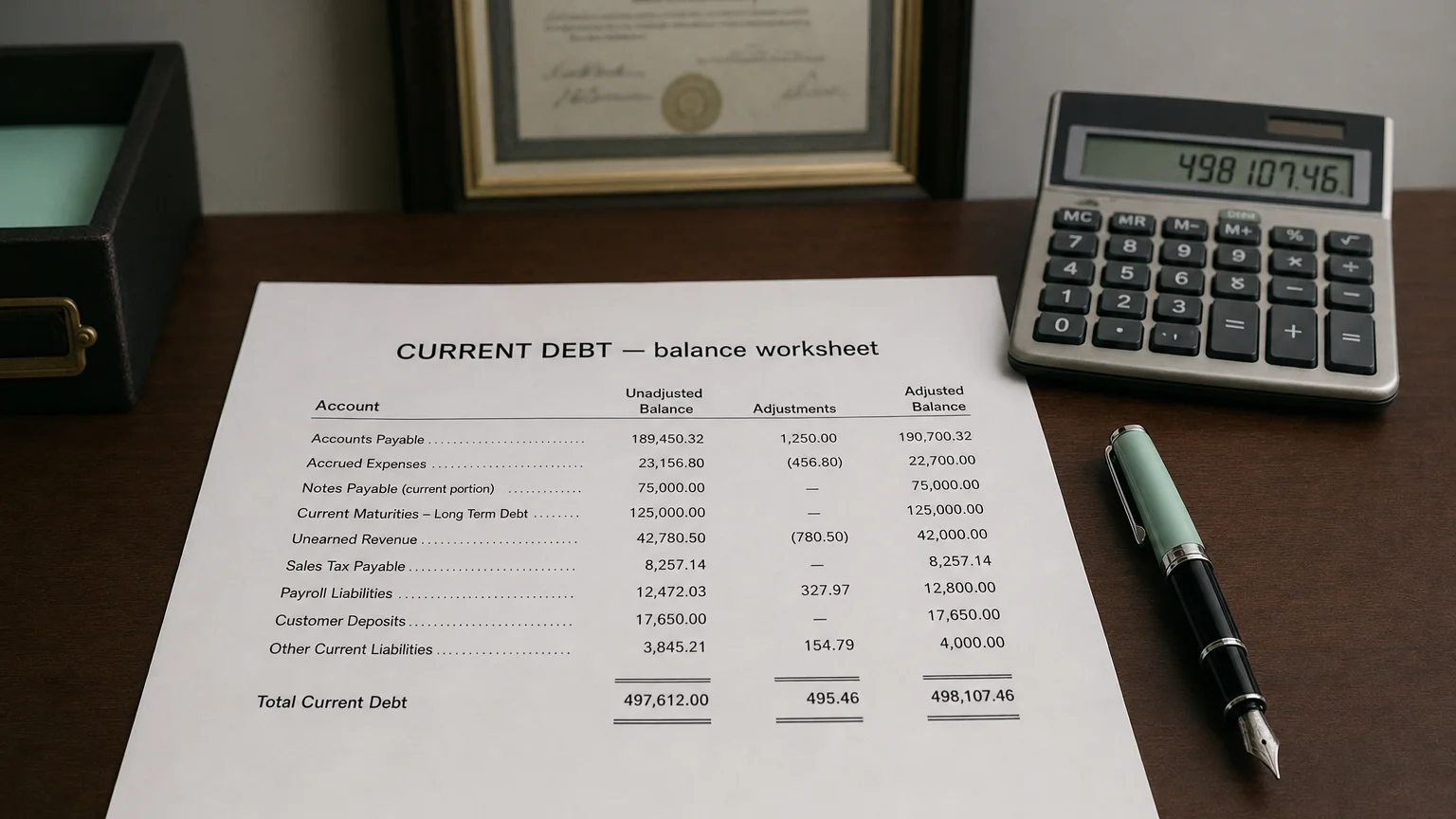
Current Debt (also known as short-term debt) refers to the portion of a company’s total debt that is due to be paid within the next 12 months. These are debts and financial obligations that must be settled in the short term and are reported under the current liabilities section of the balance sheet. Current debt represents obligations that create an immediate demand on a company’s cash flow, as the company will need to use current assets to meet these payments.
Typical Components of Current Debt
Current debt usually includes several types of short-term financial obligations:
- Short-Term Loans or Notes Payable: These are loans from banks or other lenders that must be repaid within a year. This also includes commercial paper issued by the company.
- Lines of Credit (Revolving Credit): Amounts borrowed under a revolving line of credit that are outstanding and payable within the year.
- Current Portion of Long-Term Debt: This is a crucial component, representing the principal portion of any long-term loan, bond, or other debt that is due within the upcoming 12 months.
Current Debt vs. Long-Term Debt
“In the short run, the market is a voting machine. In the long run, it is a weighing machine.”
— Benjamin Graham, Author, The Intelligent Investor Security Analysis (1934)
The key distinction between current debt and long-term debt is the timing of the obligation.
- Time Horizon: Current debt is due within 12 months; long-term debt is due after 12 months.
- Balance Sheet Placement: Current debt is a Current Liability, while long-term debt is a Non-Current Liability.
- Implications: Current debt is a measure of near-term financial pressure and liquidity risk. Long-term debt relates to the company’s overall capital structure and long-term solvency.
Example of Classification
If a company has a 200,000 of that principal is scheduled to be repaid in the next year, that 800,000 is recorded as long-term debt.
Why Current Debt Matters in Financial Analysis
Analysts and stakeholders pay close attention to current debt levels because they are a key factor in evaluating a company’s liquidity, solvency, and working capital management:
- Liquidity: High current debt relative to current assets can signal liquidity problems. It is a critical input for the Current Ratio (), which measures a company’s ability to pay its short-term bills.
- Working Capital: Current debt is a component of current liabilities and thus directly impacts working capital (). An increase in current debt reduces working capital, indicating a smaller buffer for day-to-day operations.
- Solvency and Financial Stability: While solvency is a long-term concept, a large amount of debt maturing in the current period can create a solvency crisis if the company cannot pay or refinance it. Therefore, current debt levels serve as an early warning sign of potential financial distress.
Q · 01 What is Current Debt? +