
Purchase of Intangibles is a financial concept covered in this article. Cash Outflows for Acquiring Separately Identifiable Intangible Assets
The stock market is filled with individuals who know the price of everything but the value of nothing.

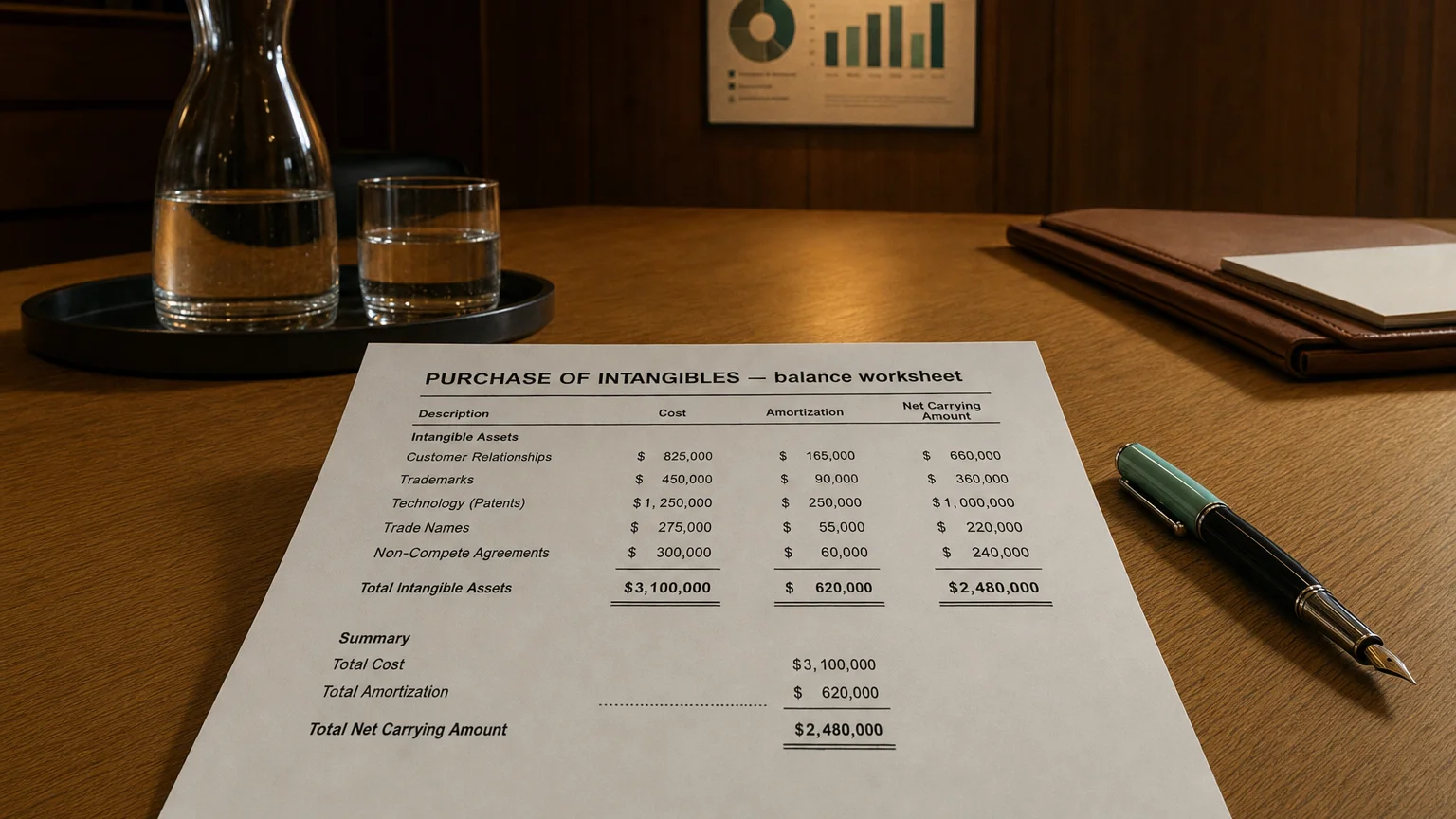
Purchase of Intangibles is the cash spent to acquire intangible assets externally—things like patents, trademarks, customer lists, software, licenses, or proprietary technology that can be separately identified and valued. This outflow hits the investing section of the cash flow statement and reflects deliberate investment in intellectual property or competitive advantages that aren’t built internally.
What It Really Means
When you see a big number here, the company is buying someone else’s brainpower—ready-made advantages that would take years and millions to develop in-house.
It’s a shortcut to new technology, stronger brands, locked-in customers, or regulatory approvals. Think of it as ‘buy vs. build’—paying cash now for future earnings power.
Unlike internal R&D (expensed immediately), these purchases get capitalized and amortized, smoothing the hit to earnings over time.
“The stock market is filled with individuals who know the price of everything but the value of nothing.”
— Philip Fisher, Author, Common Stocks and Uncommon Profits Common Stocks and Uncommon Profits (1958)
Real-World Examples That Bring It Alive
Picture these deals:
- A big pharma pays $2 billion for a biotech’s drug patent portfolio—skipping years of trials.
- A consumer giant buys a craft beer brand’s trademarks and recipes for $500 million—instant shelf presence.
- A tech firm acquires a startup’s AI algorithm and customer data for $300 million—leapfrogging competitors.
- A streaming service licenses a content library for $1 billion upfront—immediate subscriber boost.
These aren’t just expenses—they’re strategic bets on future revenue streams.
Common Drivers Behind Purchases
- Speed to market (buy ready-made tech)
- Fill pipeline gaps (pharma/drug candidates)
- Brand portfolio expansion
- Defensive moves (block competitors)
- Regulatory moats (licenses, approvals)
- Customer base acquisition
Tech and pharma lead the pack—IP is everything.
How the Cash Flow Works
The transaction:
- Cash paid to seller
- Plus direct costs (legal, due diligence)
- Outflow in investing activities
- Asset added to Other Intangible Assets at cost
- Future amortization expense over useful life
Part of larger acquisitions often bundled in ‘Purchase of Business’.
Presentation in Statements
Cash flow statement (investing section):
- ‘Purchase of Intangibles’
- ‘Acquisition of Intangible Assets’
- Often netted with sales for ‘Net Intangibles Purchase and Sale’
Balance sheet: Increases Other Intangible Assets. Income statement: Future amortization (non-cash expense).
Strategic Signals
- Aggressive growth through acquisition
- Pipeline or capability gaps being filled externally
- Bet on specific technologies or brands
- Shift in R&D strategy (buy vs. build)
- Potential for future revenue acceleration
Heavy spending here without clear integration success can lead to future impairments.
Q · 01 What is Purchase Of Intangibles? +