P/E Ratio Misconceptions Definition & Examples
Why a 'cheap' stock might be a value trap. Understand the definition, calculation, and practical use cases for investors.

Overview
Why a 'cheap' stock might be a value trap. Understand the definition, calculation, and practical use cases for investors.
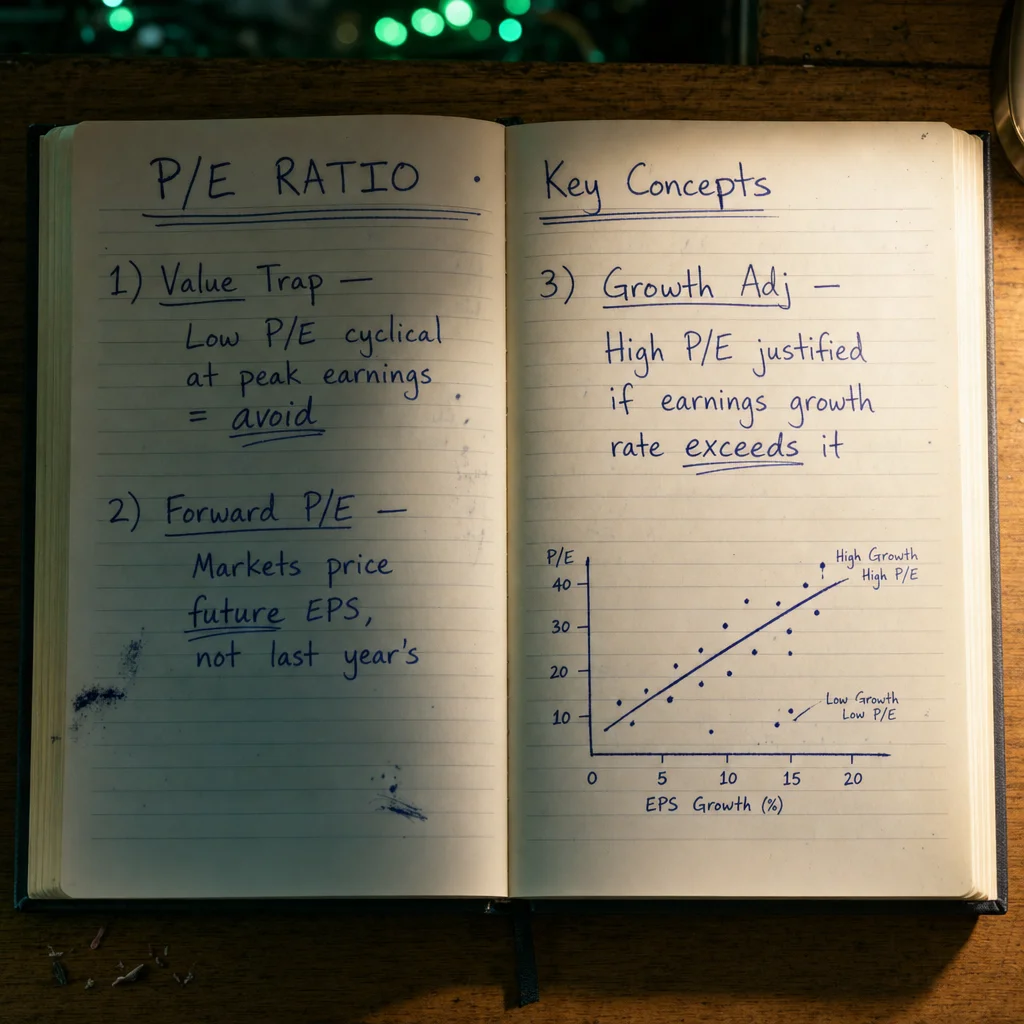
The Price-to-Earnings (P/E) ratio is the most common valuation metric, but relying on it blindly is dangerous. A low P/E stock isn't always a bargain—it might be a dying business. Conversely, a high P/E stock might be cheap relative to its explosive growth rate.
The Value Trap
Cyclical companies (like Ford or US Steel) often have very low P/E ratios at the top of their cycle because earnings are temporarily inflated. Buying them then is disastrous. You want to buy cyclicals when P/E is high (earnings depressed).
"So at the extremes, which are created by what 'most people' believe, most people are wrong."
— Howard Marks, Co-Founder & Co-Chairman, Oaktree Capital Management The Most Important Thing (2011)
<!-- quote-id: marks-006 verified -->

Forward vs. Trailing P/E
Trailing P/E looks at last year's earnings. Forward P/E looks at analyst estimates for next year. The market trades on Forward P/E. Always ask: 'Is the E (Earnings) going to grow or shrink?'