Abandoned Baby Candlestick Pattern Explained
Spot the Abandoned Baby candlestick before the crowd does. Three candles, two gaps, one rare reversal signal — here's exactly how to trade it.

Overview
Spot the Abandoned Baby candlestick before the crowd does. Three candles, two gaps, one rare reversal signal — here's exactly how to trade it.
The Abandoned Baby is a rare but highly reliable candlestick reversal pattern, signaling a complete rejection of the prior trend and a potential reversal in market direction. This pattern packs emotional and technical punch — like the market has made a sharp decision to walk away from the current trajectory.
Whether it's the Bullish Abandoned Baby or the Bearish Abandoned Baby, the message is clear: momentum has stopped dead in its tracks, and the opposing side is taking over.
Pattern Structure
The pattern is made up of three candles:
Bullish Abandoned Baby (Occurs at the bottom of a downtrend):
First Candle: A long bearish candle — strong selling pressure.
Second Candle: A doji that gaps down, with no overlap of wicks or bodies with the first or third candle. Total isolation.
Third Candle: A long bullish candle that gaps up, again with no overlap, confirming reversal.
Bearish Abandoned Baby (Occurs at the top of an uptrend):
First Candle: A long bullish candle — buyers are in control.
Second Candle: A doji that gaps up, isolated from both surrounding candles.
Third Candle: A long bearish candle that gaps down, sealing the reversal.
The key element is the doji being “abandoned” — completely cut off from the prior and next candle, visually floating in space. That’s where the name comes from.
Interpretation
| Component | Market Insight |
|---|---|
| Gap + Doji | Total indecision or exhaustion in trend |
| Gaps on both sides | Confirms a rejection of previous momentum |
| Reversal candle | Entry signal — new trend has likely begun |
| Volume spike (optional) | Can strengthen the signal — confirms shift in sentiment |
This pattern shows up at critical inflection points, usually when emotional extremes are being tested — panic selling, euphoric buying, or sharp gaps after earnings or macro news.
Strategic Use Cases
Reversal Entry Setup
Take long positions on Bullish Abandoned Baby or short positions on Bearish Abandoned Baby.
Perfect for swing trading or gap-based strategies.
Low-Risk Stop Placement
- Entry above/below the third candle; stops placed beyond the isolated doji's extreme.
Confirmation of Exhaustion
- When markets are extended, this is a strong clue that momentum is finished.
Event-Driven Trading
- Ideal in reaction to earnings gaps, rate announcements, or supply shocks.
Professional Applications
Technical Screening Tools: Flags rare, high-conviction reversal patterns for manual or algorithmic action.
Volatility Filters: Often used with ATR or Bollinger Bands to detect emotional price gaps.
Quant Signal Libraries: Plugged into machine learning datasets for high-confidence directional predictions.
Institutional Timing Models: Used to front-run trend shifts, especially at extremes or in thin markets.
Limitations
Rare pattern: Doesn’t occur often — but when it does, it’s premium-quality data.
Needs confirmation: Should be supported by volume, trend context, or momentum divergence.
Gaps may vary by instrument — forex (with fewer gaps) may require tighter candle interpretation.
Summary for Analysts and Tactical Traders
The Abandoned Baby is a visually distinct and emotionally potent candlestick pattern that offers a high-confidence reversal signal when it appears. Whether it’s bulls giving up or bears losing control, this pattern marks a critical turning point in sentiment and momentum. For traders who thrive on precision entries and controlled risk — this is your signal.
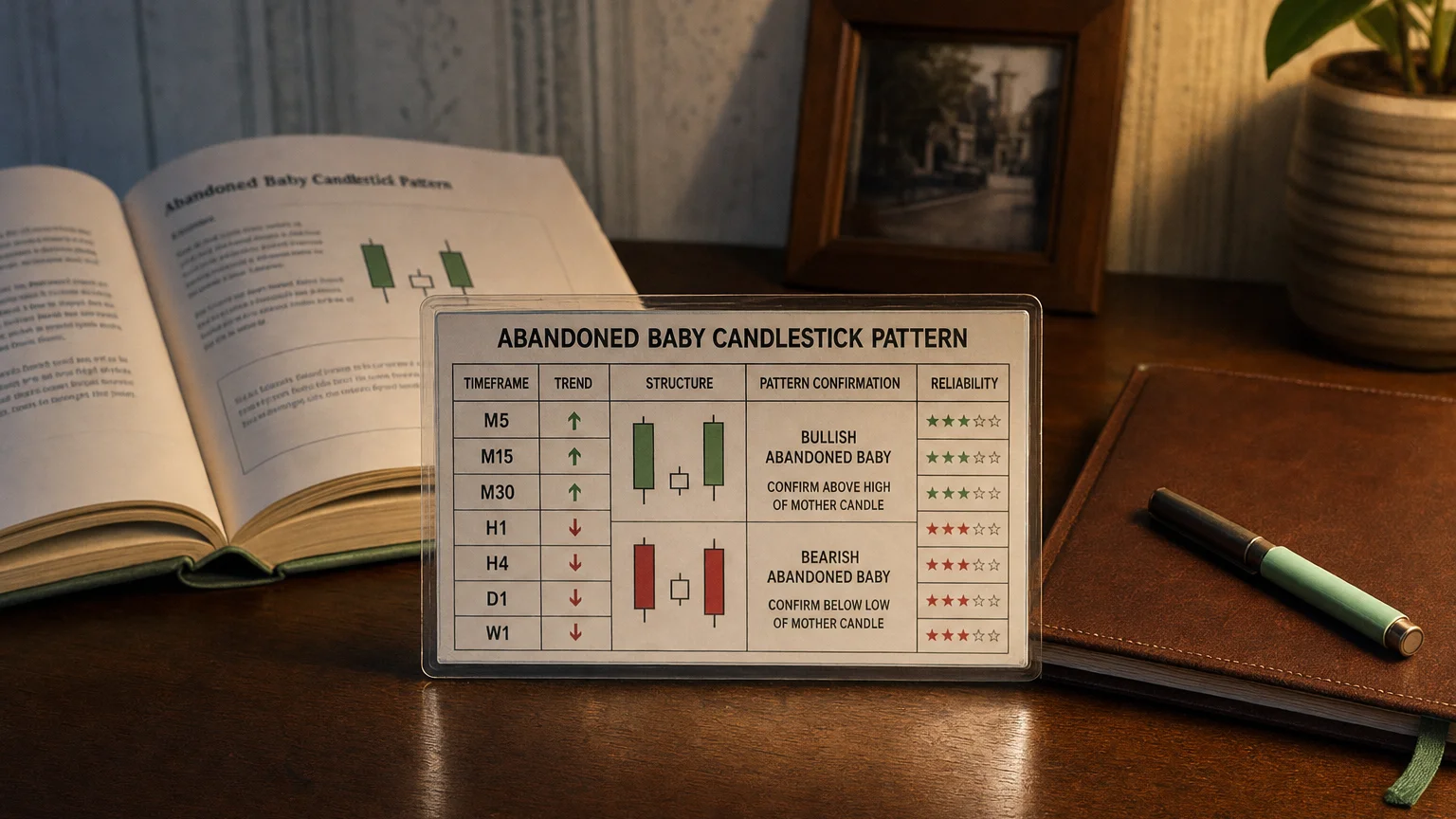
● PatternPattern Visualized
Both gaps are complete — not a single wick crosses the abandoned zone around the Doji.