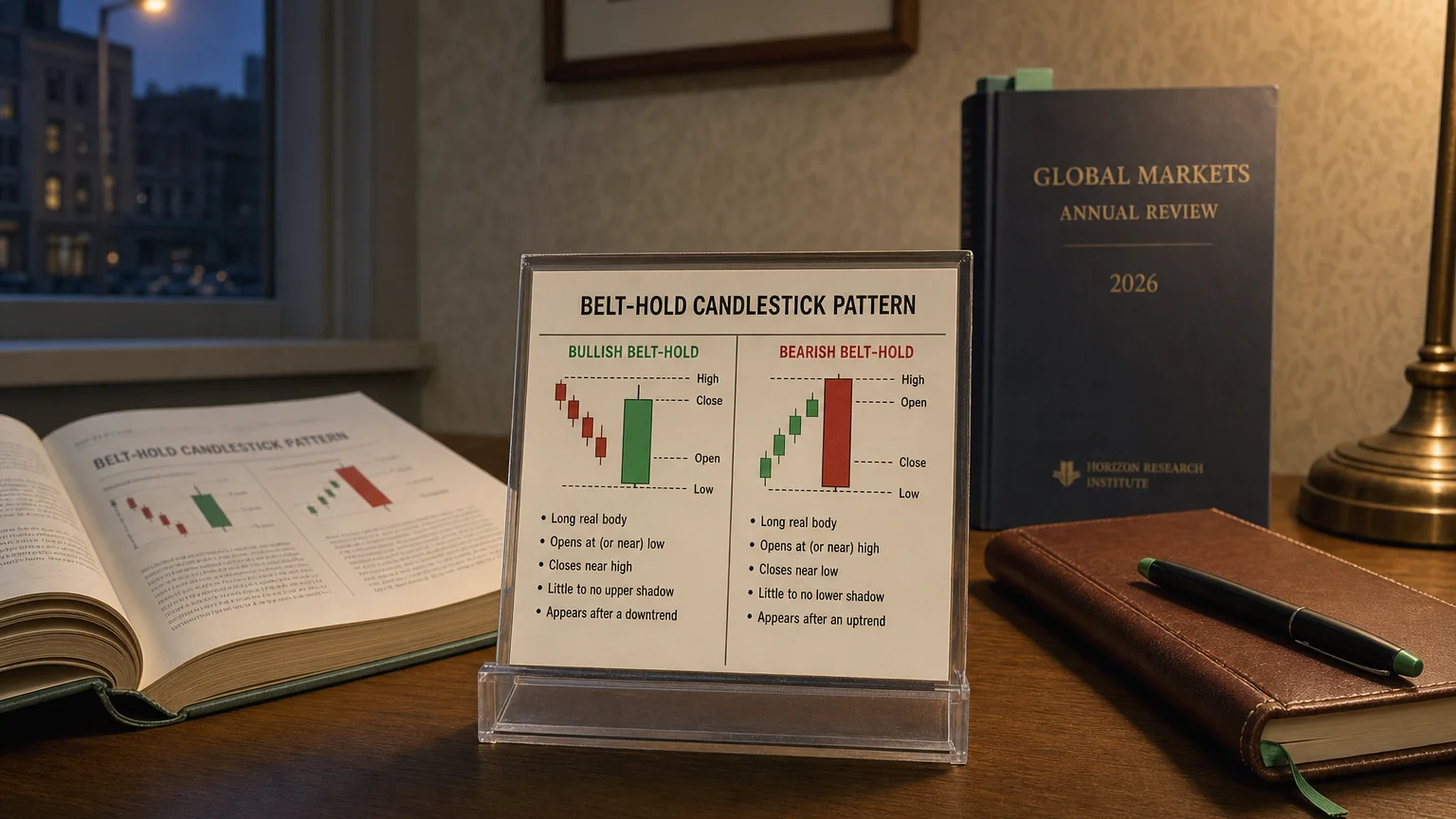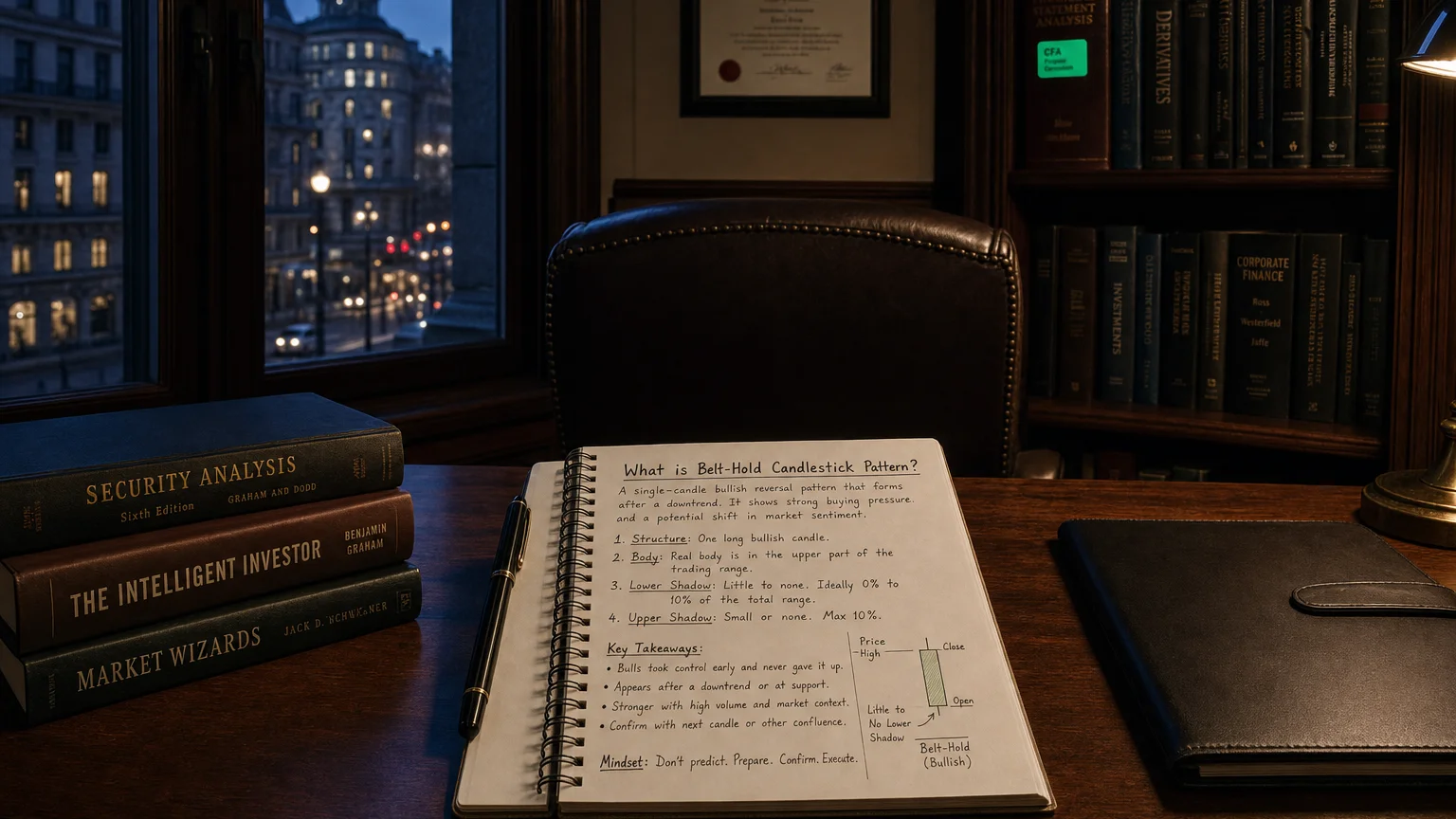
The belt-hold is a single-candle reversal pattern that opens at one extreme—the session low for bullish, the high for bearish—and closes at the opposite end with no wick on the opening side, signaling sudden, one-sided control by buyers or sellers.
There is nothing new on Wall Street or in stock speculation. What has happened in the past will happen again and again.

The Belt-hold is a single-candle reversal candlestick pattern that slams the brakes on the current trend and signals a potential immediate reversal. It appears either at the top or bottom of a trend and is characterized by a wide-range candle that opens with a gap and shows no wick on one side, indicating a hardline stance from bulls or bears right from the open.
There are two types:
-
Bullish Belt-hold (after a downtrend)
-
Bearish Belt-hold (after an uptrend)
This pattern is a market gut-check — a sudden, aggressive move in the opposite direction that flips sentiment on its head.
Structure of the Belt-hold Pattern
Bullish Belt-hold (Occurs at the bottom of a downtrend)
-
Opens at or near the low of the day.
-
Forms a long bullish candle with no lower shadow.
-
Closes strong near the high of the session.
-
Signals buyers seized control from the open and never looked back.
Bearish Belt-hold (Occurs at the top of an uptrend)
-
Opens at or near the high of the day.
-
Forms a long bearish candle with no upper shadow.
-
Closes near the session’s low.
-
Shows sellers took over instantly and overwhelmed buyers.
Key Insight: The absence of a wick on one end = total dominance by one side during the session.
Interpretation and Tactical Meaning
| Pattern Type | Interpretation |
|---|---|
| Bullish Belt-hold | Strong buyer reversal — potential trend reversal up |
| Bearish Belt-hold | Strong seller rejection — potential trend reversal down |
| No wick on open side | Immediate control from the open bell |
| Occurs after trend | High probability of sharp reaction/reversal |
This is a momentum punch — not a soft reversal. Belt-hold means somebody showed up with size and conviction.
Strategic Use Cases
-
Reversal Entry Point
- One of the most aggressive signals to enter a counter-trend trade.
-
Early Trend Reversal Detection
- Spot sentiment flips before traditional indicators respond.
-
Volume-Confirmed Plays
- Best used when the belt-hold candle forms on high volume — validating commitment.
-
Stop Hunt Detection
- Can be the mark of a whipsaw reversal after weak hands are shaken out.
Professional Applications
-
Intraday Trading: Powerful on 15m / 1h charts for detecting sudden directional shifts.
-
Swing Trading Entry Signal: Used to time pivots after extended runs.
-
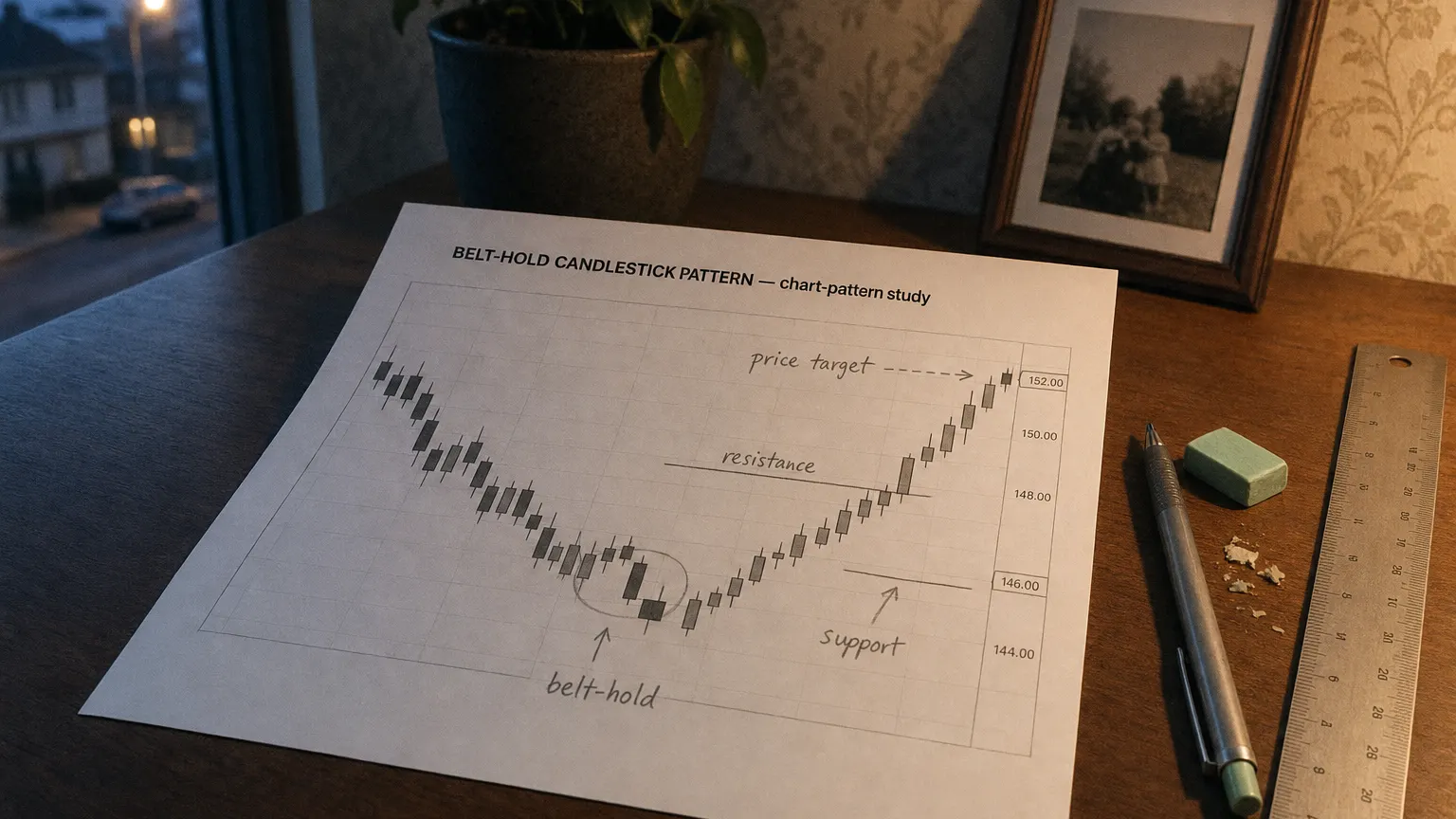
Risk Management Protocols: A belt-hold pattern near major support/resistance can justify tightening or reversing positions.
-
Pattern Recognition Algorithms: Built into AI models for high-sensitivity reversal detection.
Limitations
-
Needs context: More reliable when appearing at the end of a trend, not randomly mid-range.
-
May require confirmation: A follow-through candle helps confirm strength of the reversal.
-
Rare but violent: Don’t expect it every day — but when it lands, it matters.
Summary
The Belt-hold Pattern is a single-candle knockout blow — an aggressive reversal signal that flips market sentiment instantly. Whether it’s buyers saying “We’re done falling” or sellers yelling “Party’s over,” this pattern signals conviction, power, and a potential trend shift. It’s raw, it’s real, and it demands respect.
Q · 01 What distinguishes a bullish from a bearish belt-hold candle? +
Q · 02 How reliable is the belt-hold pattern as a reversal signal? +
Q · 03 How do traders use the belt-hold pattern to set entry and stop-loss levels? +