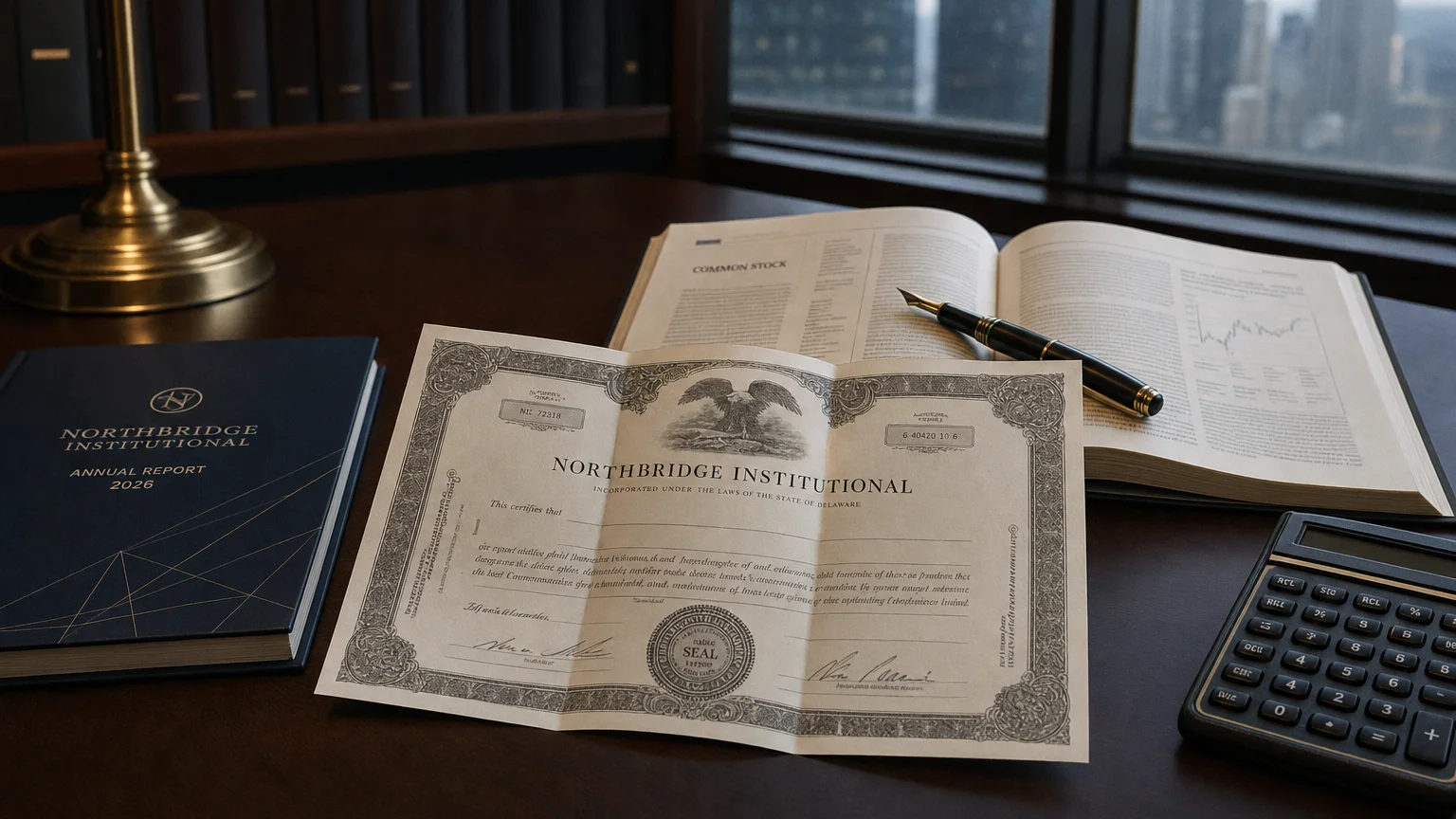
Common stock is an equity security representing fractional ownership in a corporation. Shareholders gain voting rights and a residual claim on assets but are paid last in liquidation. It appears under shareholders equity, split between par value and paid-in capital.
The stock market is filled with individuals who know the price of everything but the value of nothing.

Common stock is a type of equity security that represents ownership in a company. Each share of common stock signifies a fractional ownership stake, entitling the shareholder to a portion of the company’s profits (through dividends, if declared) and typically voting rights in shareholder meetings. Common stockholders are usually the last to be paid if the company liquidates (after all creditors and preferred shareholders), which means their investment carries higher risk - but also the potential for higher returns if the company performs well.
Common Stock on the Balance Sheet
“The stock market is filled with individuals who know the price of everything but the value of nothing.”
— Philip Fisher, Author, Common Stocks and Uncommon Profits Common Stocks and Uncommon Profits (1958)
On a company’s balance sheet, common stock appears in the Shareholders’ Equity section. It represents the money that shareholders have invested in the company. This contributed capital forms part of the company’s net worth (assets minus liabilities), which is the book value attributable to shareholders.
Recording Common Stock: Par Value and APIC
When companies issue common stock, the accounting is typically split into two parts. The par value (a nominal value like $0.01) of all issued shares is recorded in the Common Stock account. Any amount that investors paid above the par value is recorded in a separate equity account called Additional Paid-In Capital (APIC).
Par Value Example
Imagine a company issues a new share of common stock with a par value of 5, the company records 4 in the ‘Additional Paid-In Capital’ account.
Significance of Common Stock: Ownership and Rights
Common stock is significant because it embodies the ownership interest and rights of the shareholders. Key features include:
- Ownership Stake and Control: Each common share represents a portion of ownership and typically comes with voting rights (often one vote per share) to elect the board of directors and vote on major corporate policies.
- Profit Sharing (Dividends): Common stockholders may receive dividends, which are distributions of a portion of the company’s profits. However, these dividends are not guaranteed and are paid at the company’s discretion.
- Residual Claim on Assets: In the event of bankruptcy, common shareholders are last in line to receive payment, after creditors and preferred stockholders. This makes their investment riskier.
- Capital Growth Potential: Common stockholders benefit from the company’s growth. If the business performs well, the market price of the shares can rise, allowing shareholders to profit from capital gains.
Example: Balance Sheet Presentation
To illustrate how common stock is presented, suppose a company issues 100 shares of its common stock with a par value of 15 each. The company receives a total of $1,500. The Shareholders’ Equity section would show:
Together, these two line items reflect the $1,500 of capital that shareholders invested in the company for those shares. This presentation makes it clear how much of the investment is attributed to the nominal par value versus the additional premium paid by investors.

Q · 01 What rights do common stockholders have? +
Q · 02 How is common stock recorded on the balance sheet? +
Q · 03 Why do common stockholders bear more risk than bondholders? +