A guide to the short-term, liquid resources a company owns, and how they are used to assess its operational liquidity and financial health.
If you aren't willing to own a stock for ten years, don't even think about owning it for ten minutes.
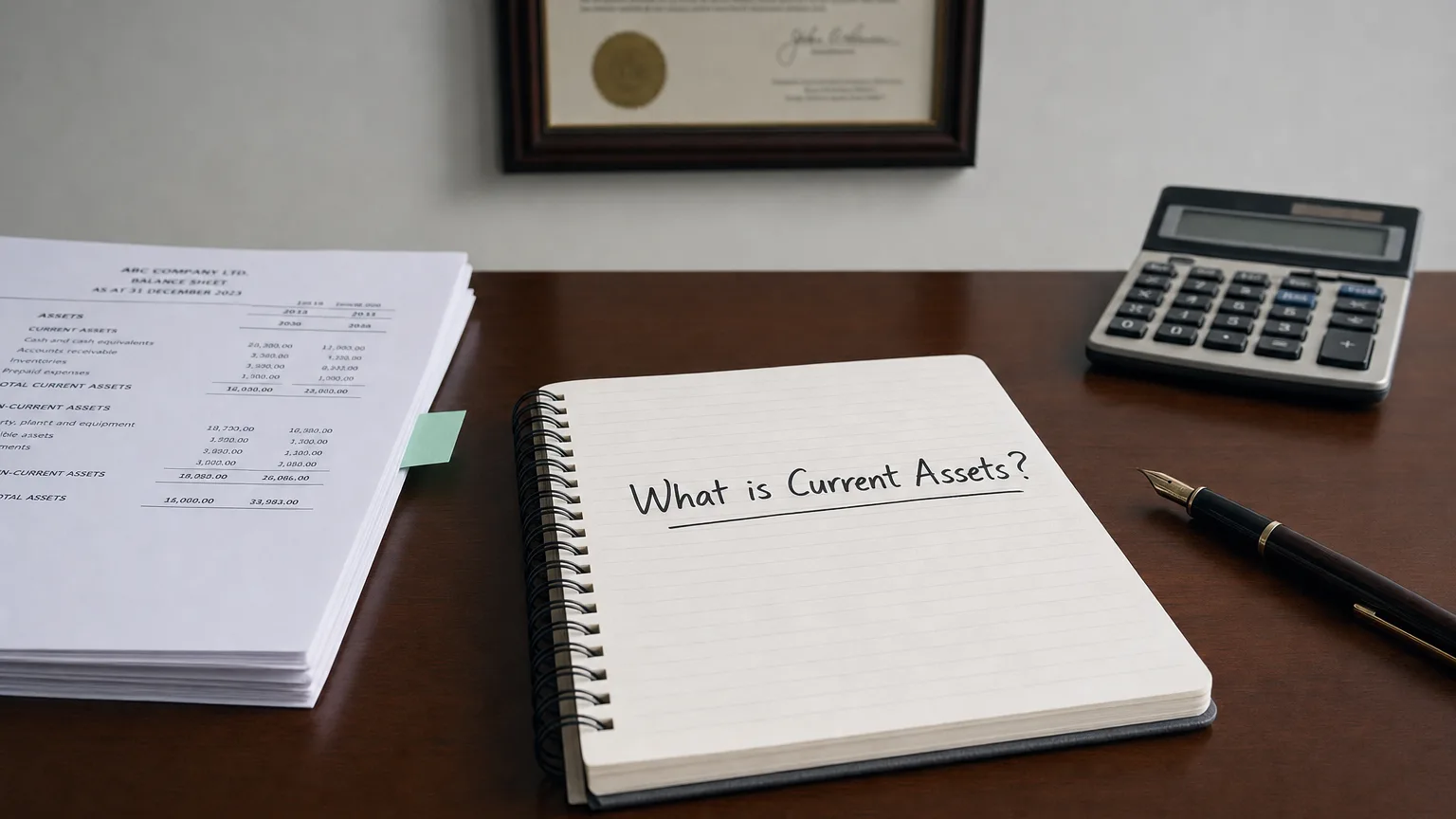
Current assets are the short-term resources a company owns that are expected to be converted into cash, sold, or consumed within one year (or within the business’s normal operating cycle, if longer). These assets are considered liquid assets, meaning they can be readily turned into cash to fund day-to-day operations or pay short-term obligations. On a classified balance sheet, current assets are usually listed first in the assets section because of their liquidity and near-term importance.
Common Examples of Current Assets
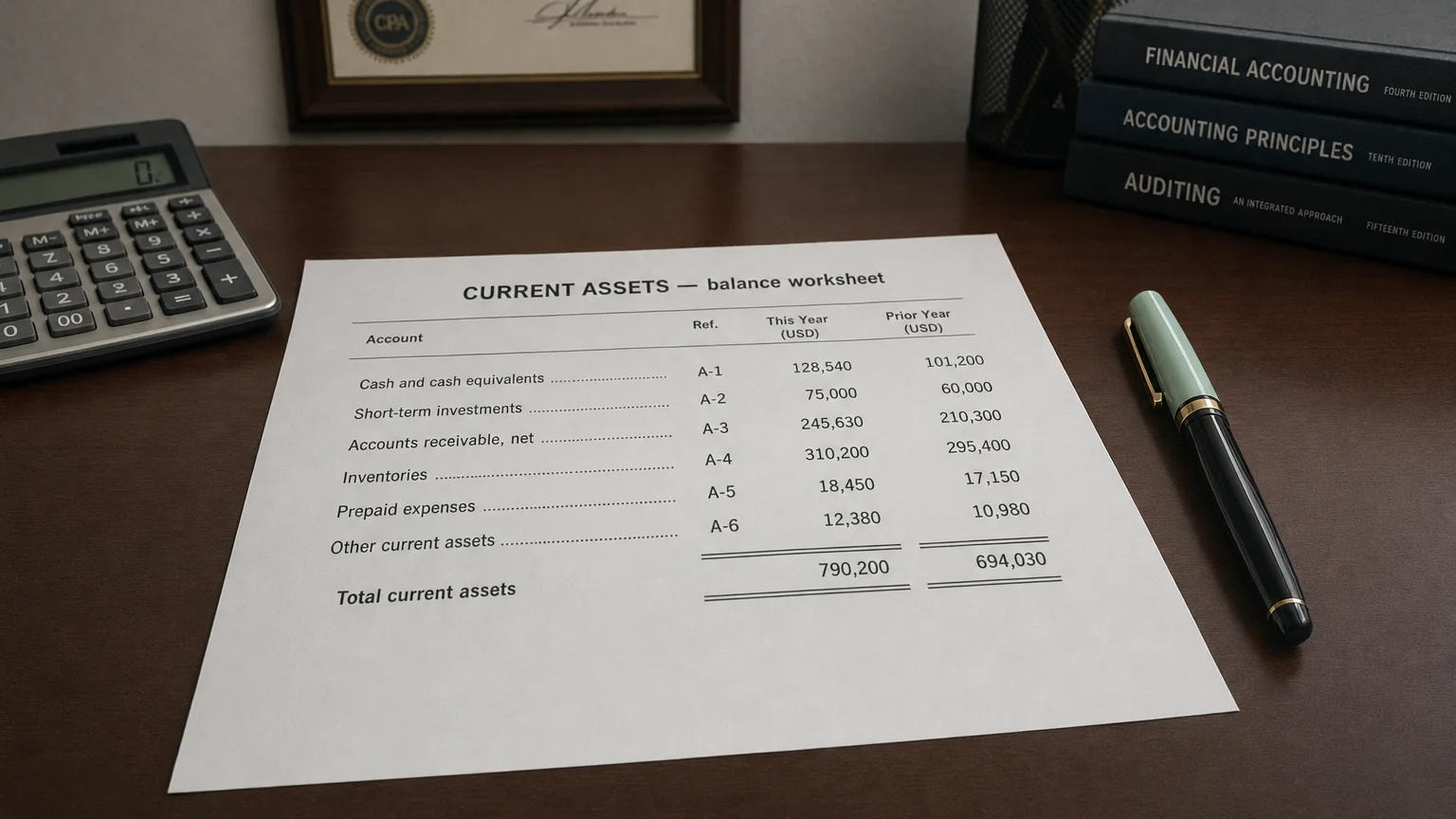
Current assets are listed on the balance sheet in order of liquidity (how quickly they can be converted to cash). Common examples include:
- Cash and Cash Equivalents: The most liquid assets, including physical cash, bank balances, and short-term investments like Treasury bills that mature in three months or less.
- Accounts Receivable (AR): Money owed to the company by customers for goods or services delivered on credit. These are typically collected within 30-90 days.
- Inventory: Goods available for sale, work-in-progress, and raw materials used in production. Inventory is expected to be sold and converted to cash within the operating cycle.
- Short-Term Investments (Marketable Securities): Liquid investments like stocks and bonds that the company intends to sell within one year.
- Prepaid Expenses: Advance payments for future services, such as rent or insurance. While not convertible to cash, they are current because they prevent a future cash outflow.
The Role of Current Assets in Financial Analysis
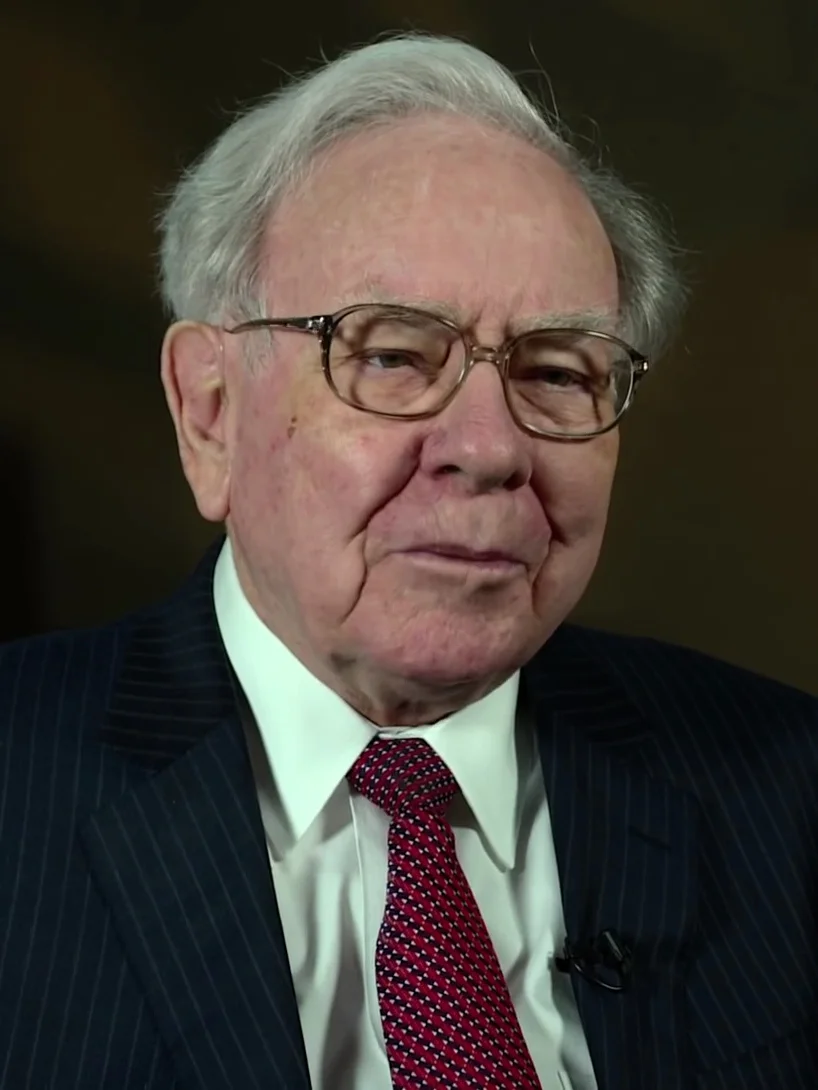
“If you aren’t willing to own a stock for ten years, don’t even think about owning it for ten minutes. Put together a portfolio of companies whose aggregate earnings march upward over the years, and so also will the portfolio’s market value.”
— Warren Buffett, Chairman & CEO, Berkshire Hathaway Berkshire Hathaway Chairman’s Letter 1996 (1996)
Current assets are essential for evaluating a company’s liquidity—its ability to meet short-term obligations. Analysts use them to calculate key financial health ratios.
Key Liquidity Metrics
Current Ratio: This measures a company’s ability to pay all its short-term debts with its short-term assets. A ratio above 1 is generally preferred.
Quick Ratio (Acid-Test Ratio): A more conservative measure that excludes less liquid assets like inventory. A ratio of 1.0 or higher is often seen as a sign of strong liquidity.
Working Capital: This is the capital available for day-to-day operations. Positive working capital is a sign of good short-term financial health.
Current Assets vs. Non-Current Assets
The primary distinction between current and non-current assets lies in their time horizon and purpose.
- Time Horizon: Current assets are expected to be used or converted to cash within one year. Non-current (or long-term) assets have a useful life or investment horizon beyond one year.
- Liquidity: Current assets are highly liquid. Non-current assets, like Property, Plant, & Equipment (PP&E) or intangible assets, are illiquid as they cannot be sold quickly without disrupting operations.
- Purpose: Current assets fund day-to-day operations. Non-current assets provide the long-term infrastructure for the business to generate revenue over multiple periods.
Real-World Examples: Industry Differences
ExxonMobil (Capital-Intensive)
At year-end 2021, ExxonMobil reported $59.2 billion in Current Assets, which included cash, accounts receivable, and large inventories of crude oil and petroleum products. This was a small fraction of its total assets, as most of its value was in non-current PP&E like oil rigs and refineries. This is typical for a capital-intensive business.
Microsoft (Technology)
As of June 30, 2022, Microsoft’s Current Assets totaled **104.7 billion combined) and accounts receivable ($44.3 billion). This reflects a business model with strong cash generation and a focus on liquid assets rather than heavy physical infrastructure.
Q · 01 What is Current Assets? +