
A clear explanation of two key current liabilities on the balance sheet: Accounts Payable (unpaid bills) and Accrued Expenses (incurred but unbilled costs).
Pennies don't fall from heaven, they have to be earned here on earth.
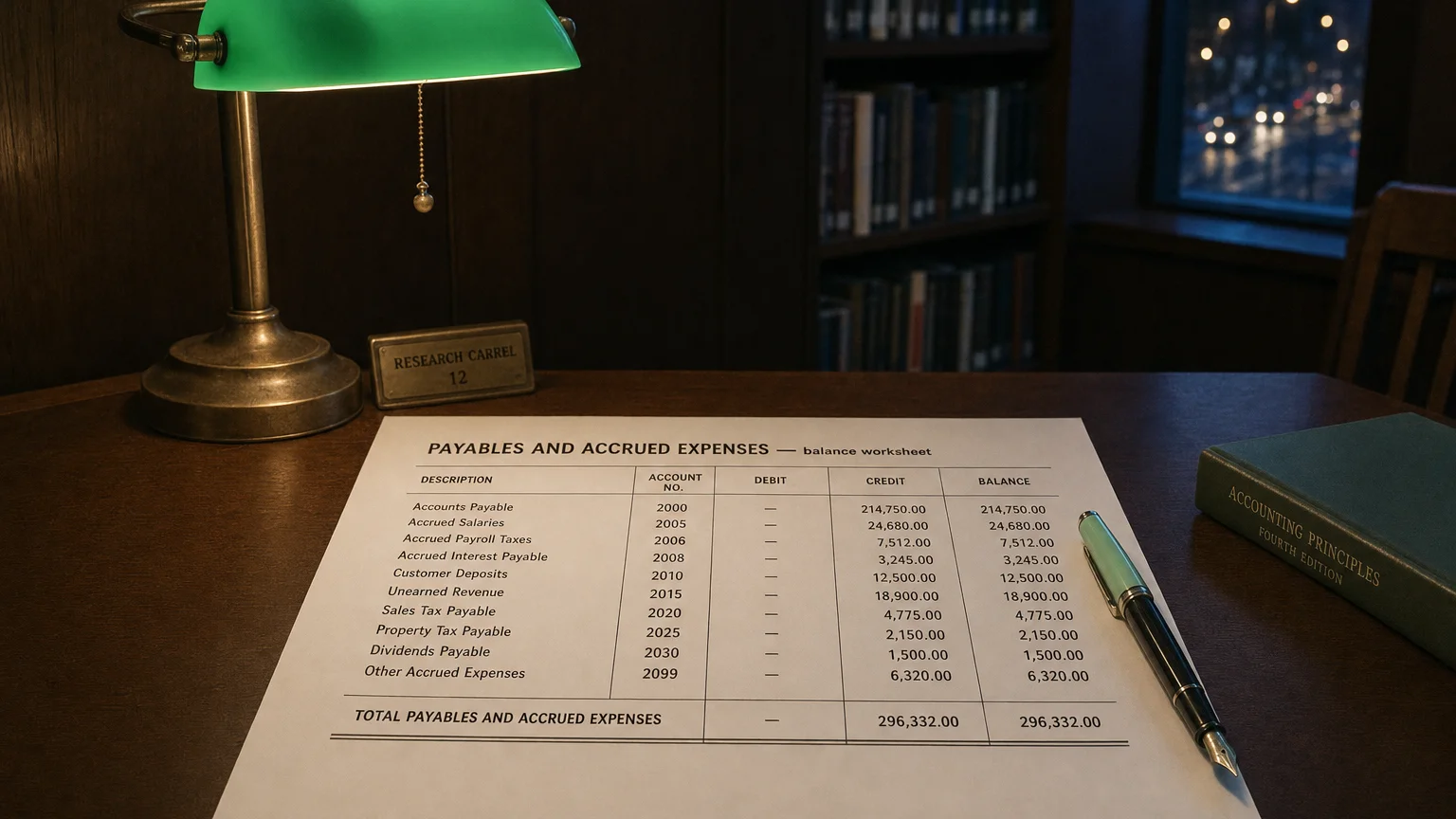
On a company’s balance sheet, payables (usually referring to Accounts Payable) and accrued expenses are two types of current liabilities. These items represent money the company owes to others in the near term. In simple terms, they are the company’s unpaid bills and expenses. Understanding what each term means and how they differ is important because they show what debts the company must pay soon, helping readers gauge the company’s short-term financial obligations and overall financial health. Both accounts payable and accrued expenses ensure that all obligations are recorded, keeping the financial statements accurate and transparent.
What Are Accounts Payable (Payables)?
Accounts Payable (AP) is the amount of short-term debt a company owes to its suppliers and creditors for purchases of goods or services on credit. In other words, these are outstanding bills the company has received but not yet paid. They are listed under current liabilities on the balance sheet, meaning they are due within a year or less. Companies often use accounts payable to manage cash flow by buying now and paying later (often in 30, 60, or 90 days).
Simple Accounts Payable Example
Imagine a company orders 500 in Accounts Payable. This 500 to show the bill is settled.
“Pennies don’t fall from heaven, they have to be earned here on earth.”
— Margaret Thatcher, Prime Minister of the United Kingdom (1979-1990) Speech at Lord Mayor’s Banquet, London (1979)
What Are Accrued Expenses?
Accrued expenses (also called accrued liabilities) are expenses a company has incurred (used up or benefited from) but has not yet paid or received a bill for. The word “accrued” means accumulated or built up. Under accrual accounting, companies recognize these expenses when they happen, not when payment occurs. Like accounts payable, accrued expenses are current liabilities on the balance sheet.
Common Accrued Expenses
Examples include salaries and wages earned by employees but not yet paid, interest that has accumulated on loans, utilities that have been used but not yet billed, and taxes incurred but not yet paid.
For instance, if employees work through the end of June but payday is in early July, the company will accrue the wages for the last days of June as an expense and a liability. This matches the expense to the period the work was done. These unpaid wages would be part of accrued expenses on the balance sheet.
Differences Between Accounts Payable and Accrued Expenses
While both are current liabilities representing money owed, there are key differences:
- Trigger for Recording: Accounts payable are recorded when an invoice is received. Accrued expenses are recorded when an expense has been incurred but no invoice has arrived.
- Nature of Items: Accounts payable typically arise from specific purchases of materials or inventory. Accrued expenses often involve ongoing costs that accumulate over time, like wages, rent, or interest.
- Certainty of Amount: The amount for accounts payable is exact because it comes from an invoice. Accrued expenses might initially be an estimate (e.g., estimating a monthly utility bill) and adjusted later when the actual bill arrives.
- Payment Recipient: Accounts payable are owed to external suppliers and vendors. Accrued expenses can be owed to various parties, including employees (salaries), banks (interest), or governments (taxes).
Why They Matter in Financial Reporting
Both payables and accrued expenses are crucial for accurate financial reporting. They ensure that expenses are recorded in the correct period, matching costs to the time they were incurred. This is a core concept known as the accrual principle of accounting.
The Role of GAAP
Generally Accepted Accounting Principles (GAAP) require companies to use accrual accounting. Without recording these liabilities, a company’s expenses would be understated and its profit would appear artificially high. Reporting these obligations provides a more transparent and accurate picture of a company’s financial performance and position.
From a transparency perspective, seeing these liabilities on the balance sheet tells investors and stakeholders what the company owes in the near term. This is just as important as knowing what the company owns and builds trust that the company isn’t hiding any impending obligations.
Impact on a Company’s Financial Health
The levels of payables and accrued expenses affect assessments of a company’s short-term financial health. As current liabilities, they are key inputs for liquidity ratios like the current ratio (Current Assets / Current Liabilities).
A high amount of payables and accruals relative to cash might signal liquidity issues. For example, a continuous, significant rise in accounts payable could mean the company is delaying payments due to cash flow problems. However, it could also be a smart cash management strategy if the company is simply taking full advantage of generous credit terms from suppliers.
Working Capital Impact
Both accounts are part of the working capital calculation (Current Assets - Current Liabilities). If these liabilities grow without a corresponding increase in current assets, working capital shrinks, which can be a warning sign of declining short-term financial stability.
Ultimately, a healthy company manages its payables and accruals effectively—paying on time to maintain good relationships while using credit wisely. Monitoring these items provides insight into a company’s liquidity, operational efficiency, and overall financial stability.
Q · 01 What is Payables And Accrued Expenses? +