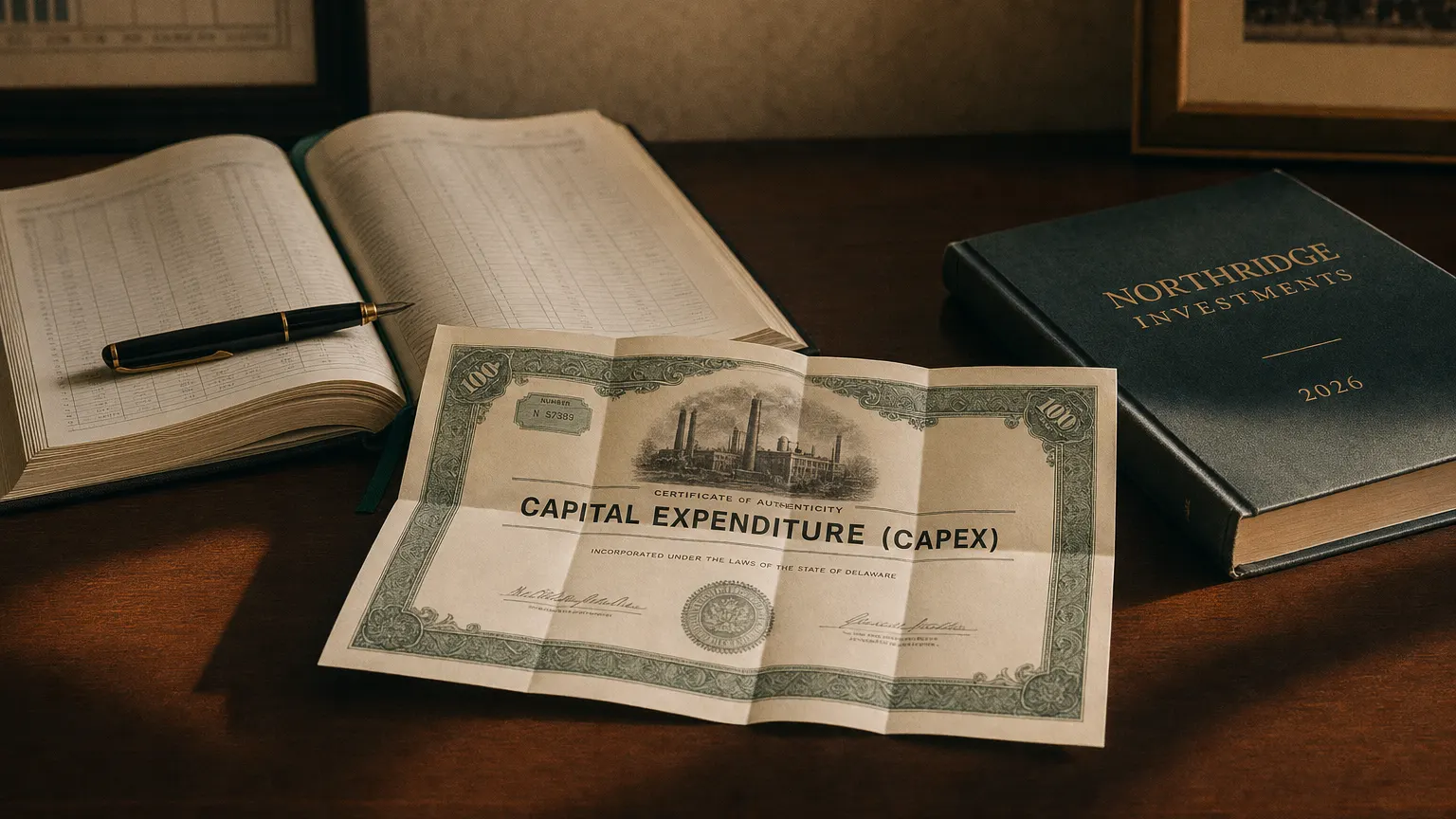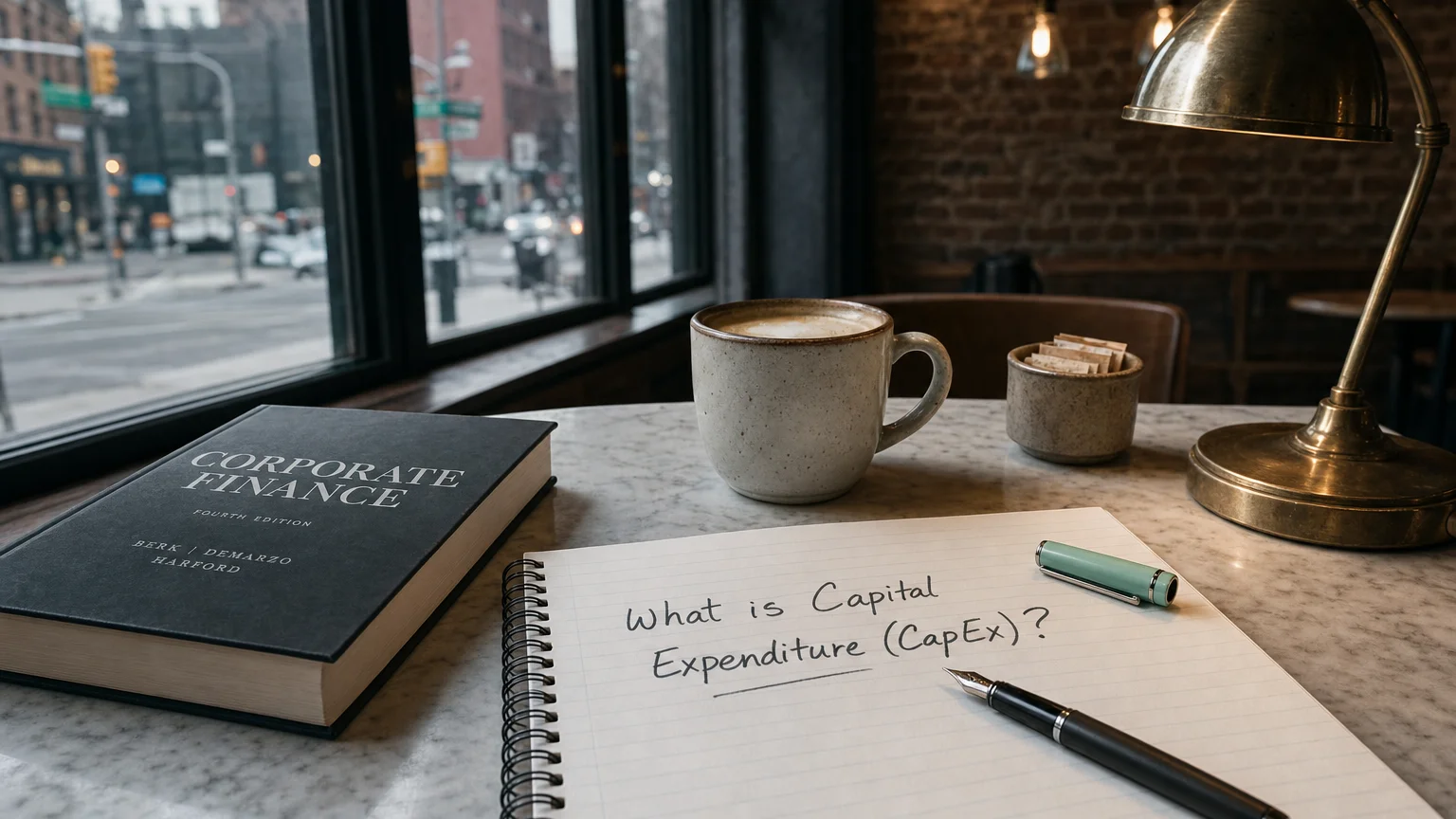
Capital expenditure (CapEx) is the cash a company spends to acquire or upgrade long-term physical assets such as equipment, buildings, and technology. CapEx is capitalized on the balance sheet and depreciated over time, and it directly reduces free cash flow.
You only have to be able to evaluate companies within your circle of competence. The size of that circle is not very important; knowing its boundaries, however, is vital.
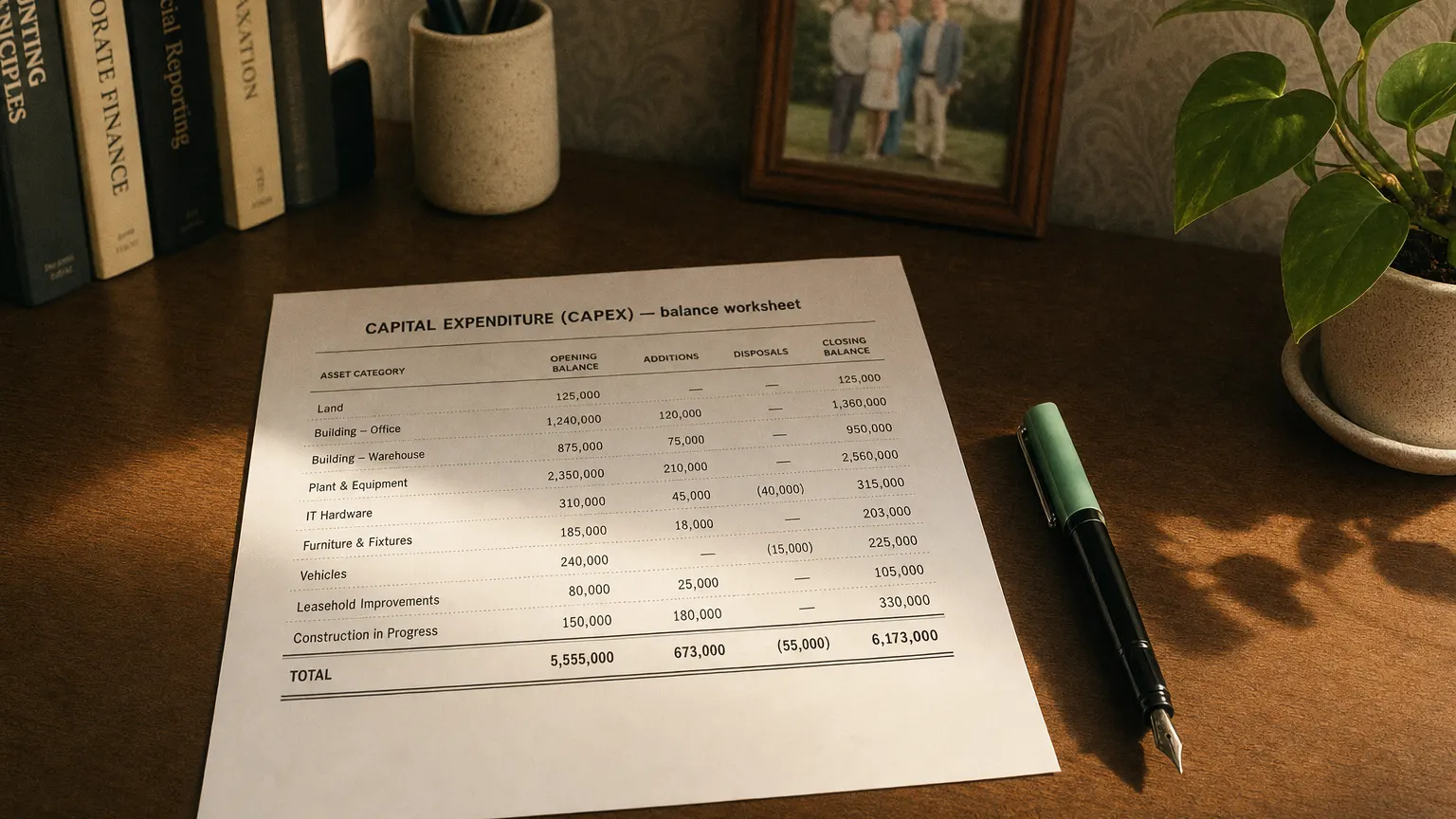
Capital expenditures (CapEx) are the funds a company uses to purchase or upgrade long-term assets that will benefit the business for more than one year. In other words, CapEx is money spent on things like equipment, buildings, or technology infrastructure that the company will use in its operations over the long term. Because these expenditures create assets with ongoing value, they are capitalized - meaning they are recorded on the balance sheet as assets, not immediately expensed on the income statement. In summary, CapEx represents investments in the future capacity or efficiency of the business, as opposed to day-to-day operating costs.
CapEx on the Financial Statements
On a company’s Statement of Cash Flows, CapEx is reported in the Investing Activities section. This is because it involves the purchase of long-term investments (assets) for the company. It typically appears as a cash outflow labeled something like ‘Purchase of property, plant, and equipment (PP&E)’ or ‘Capital expenditures.’ This line item will have a negative value (often in parentheses) to indicate cash leaving the company to buy or build these long-term assets.
The Income Statement Connection
Importantly, CapEx does not appear as an immediate expense on the income statement. Instead, the cost of the asset is allocated gradually over its useful life through depreciation, which is a non-cash expense reported on the income statement.
“You only have to be able to evaluate companies within your circle of competence. The size of that circle is not very important; knowing its boundaries, however, is vital.”
— Warren Buffett, Chairman & CEO, Berkshire Hathaway Berkshire Hathaway Chairman’s Letter 1996 (1996)
Common Examples of Capital Expenditures
CapEx usually involves major purchases or investments in physical assets and infrastructure. Common examples include:
- Building or Buying New Facilities: Purchasing land and constructing a new office, warehouse, retail store, or factory.
- Purchasing Equipment and Machinery: Acquiring new manufacturing machines, a fleet of delivery vehicles, computer servers, or other significant equipment.
- Renovating or Upgrading Existing Assets: Making major improvements to extend the life or capacity of an asset, such as refurbishing a production plant or replacing the roof of a building.
- Implementing Long-Term Technology Systems: Investing in substantial software, IT infrastructure, or proprietary technology platforms that will be used for several years.
Capital Expenditures (CapEx) vs. Operating Expenses (OpEx)
It is crucial to distinguish capital expenditures from operating expenses. Both involve spending money, but they are treated very differently in finance and accounting:
- Time Horizon of Benefit: CapEx provides a long-term benefit (e.g., a factory machine used for a decade). OpEx covers short-term costs for day-to-day operations and benefits only the current period (e.g., monthly rent or salaries).
- Accounting Treatment: CapEx is capitalized—recorded as an asset on the balance sheet and expensed gradually through depreciation. OpEx is expensed immediately on the income statement, directly reducing the current period’s profit.
- Cash Flow Classification: CapEx is a cash outflow in the Investing Activities section. OpEx is part of the cash flows in the Operating Activities section.
Illustrative Comparison
If a delivery company buys a new truck for $100,000, that purchase is CapEx. The truck is a long-term asset. However, the fuel, routine maintenance, and the driver’s salary for that truck are OpEx, as they are regular costs required to keep the truck running day-to-day.
Why CapEx Matters for Strategy and Growth
CapEx is a critical indicator of a company’s long-term investment strategy and future growth potential. Analysts pay close attention to CapEx levels because they reveal how a company is investing in itself.
- Driving Future Growth: CapEx enables a company to increase its capacity, improve efficiency, or enter new markets. Significant CapEx investments are often a sign that a company is in a growth phase, building for a larger future.
- Signaling Long-Term Strategy: CapEx plans reflect a company’s strategic priorities. Heavy spending on new facilities signals an expansion strategy, while minimal CapEx might indicate a focus on maintenance or a lack of growth opportunities.
- Maintaining Competitiveness: CapEx is also essential for maintenance. Replacing old equipment or upgrading technology is necessary to remain efficient and competitive. Under-investing in CapEx can lead to aging infrastructure and a decline in future performance.
- Impacting Free Cash Flow (FCF): CapEx is a direct deduction in the FCF calculation (FCF = Operating Cash Flow - CapEx). A company that can fund its CapEx needs and still produce positive FCF is typically in a strong financial position. High CapEx may reduce FCF in the short term, but it could lead to higher growth and cash flow in the future.
Q · 01 Where does CapEx appear on financial statements? +
Q · 02 What is the difference between CapEx and OpEx? +
Q · 03 How does CapEx affect free cash flow? +