The Market Analysis Process A Step-by-Step Framework
Learn how systematic market analysis works — from macro screening to trade execution — through a clear flowchart and concise explainer.

Overview
Learn how systematic market analysis works — from macro screening to trade execution — through a clear flowchart and concise explainer.
Overview
Successful investors rely on a repeatable, structured workflow rather than acting on intuition. The chart below outlines the full market analysis process — from broad macro context to individual position sizing.
flowchart TD
    A([Start: Market Analysis]) --> B[Macro Screening]
    B --> B1[GDP & Growth Trends]
    B --> B2[Interest Rate Environment]
    B --> B3[Sector Rotation Signals]
    B1 & B2 & B3 --> C{Macro Favorable?}
    C -- No --> Z1([Reduce Exposure / Hold Cash])
    C -- Yes --> D[Sector & Industry Filter]
    D --> D1[Relative Strength vs S&P 500]
    D --> D2[Earnings Revision Trends]
    D1 & D2 --> E[Fundamental Stock Screening]
    E --> E1[Revenue & Earnings Growth]
    E --> E2[Valuation: P/E, EV/EBITDA]
    E --> E3[Balance Sheet Quality]
    E1 & E2 & E3 --> F{Passes Fundamentals?}
    F -- No --> Z2([Remove from Watchlist])
    F -- Yes --> G[Technical Entry Analysis]
    G --> G1[Support & Resistance Levels]
    G --> G2[Volume Confirmation]
    G --> G3[Momentum Indicators]
    G1 & G2 & G3 --> H{Entry Signal?}
    H -- No --> I([Monitor & Wait])
    H -- Yes --> J[Position Sizing & Risk Management]
    J --> J1[Define Stop-Loss Level]
    J --> J2[Calculate Risk/Reward Ratio]
    J2 --> K{R/R ≥ 2:1?}
    K -- No --> Z3([Skip Trade])
    K -- Yes --> L([Execute Trade])
Phase 1 — Macro Screening
Before evaluating individual stocks, analysts assess the macro backdrop. Rising interest rates, slowing GDP, or deteriorating credit spreads can override otherwise strong company fundamentals.
"You can't take the same actions as everyone else and expect to outperform."
— Howard Marks, Co-Chairman, Oaktree Capital Management Oaktree Memo: 'The Most Important Thing' (2003)
<!-- quote-id: marks-004 verified -->
Key inputs:
- Central bank policy direction (Fed, ECB)
- Leading economic indicators (PMI, yield curve)
- Cross-asset signals (USD strength, commodity prices)

Phase 2 — Sector and Industry Selection
Top-down analysis filters which sectors offer the highest probability of outperformance. Sector rotation — the cyclical shift of capital between industries — provides actionable entry points.
Phase 3 — Fundamental Stock Screening
Once a sector is identified, stock screening narrows the universe using quantitative filters: revenue growth, earnings quality, and valuation multiples. Stocks that pass this gate enter a watchlist for technical review.
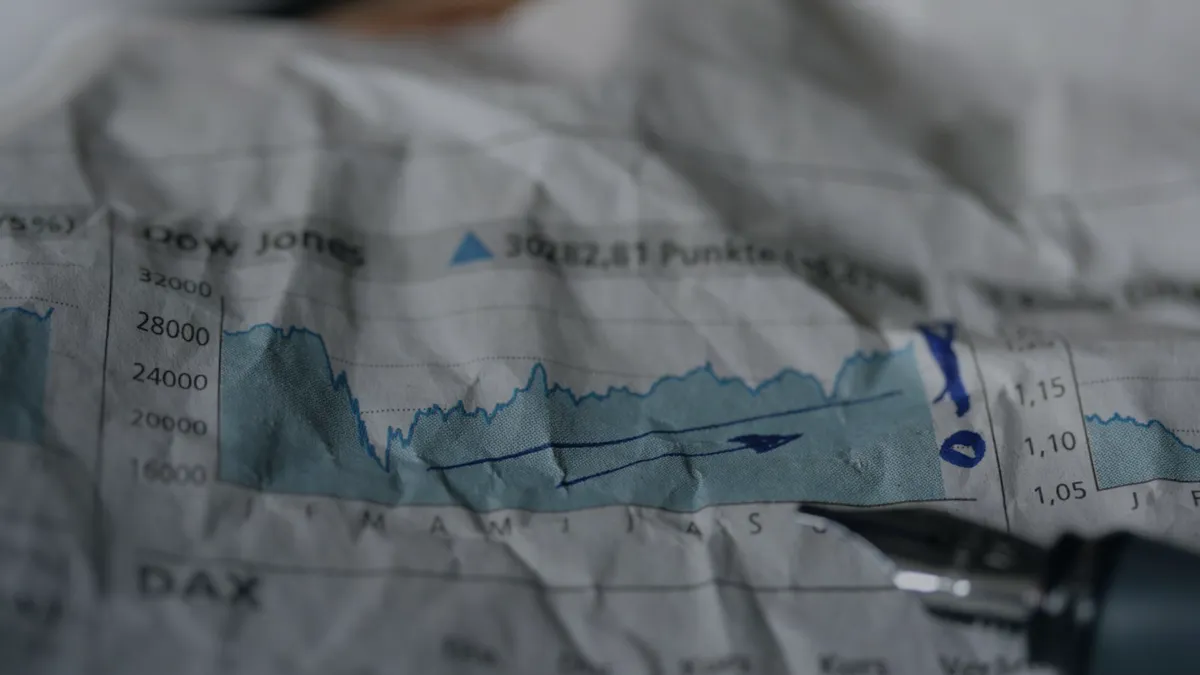
Phase 4 — Technical Entry and Risk Management
Fundamental analysis answers what to buy; technical analysis answers when. Entry timing, stop-loss placement, and position sizing are the final steps before execution.
A minimum 2:1 risk-reward ratio is required. Trades that do not meet this threshold are skipped — discipline in this step is what separates consistent performers from the average retail investor.