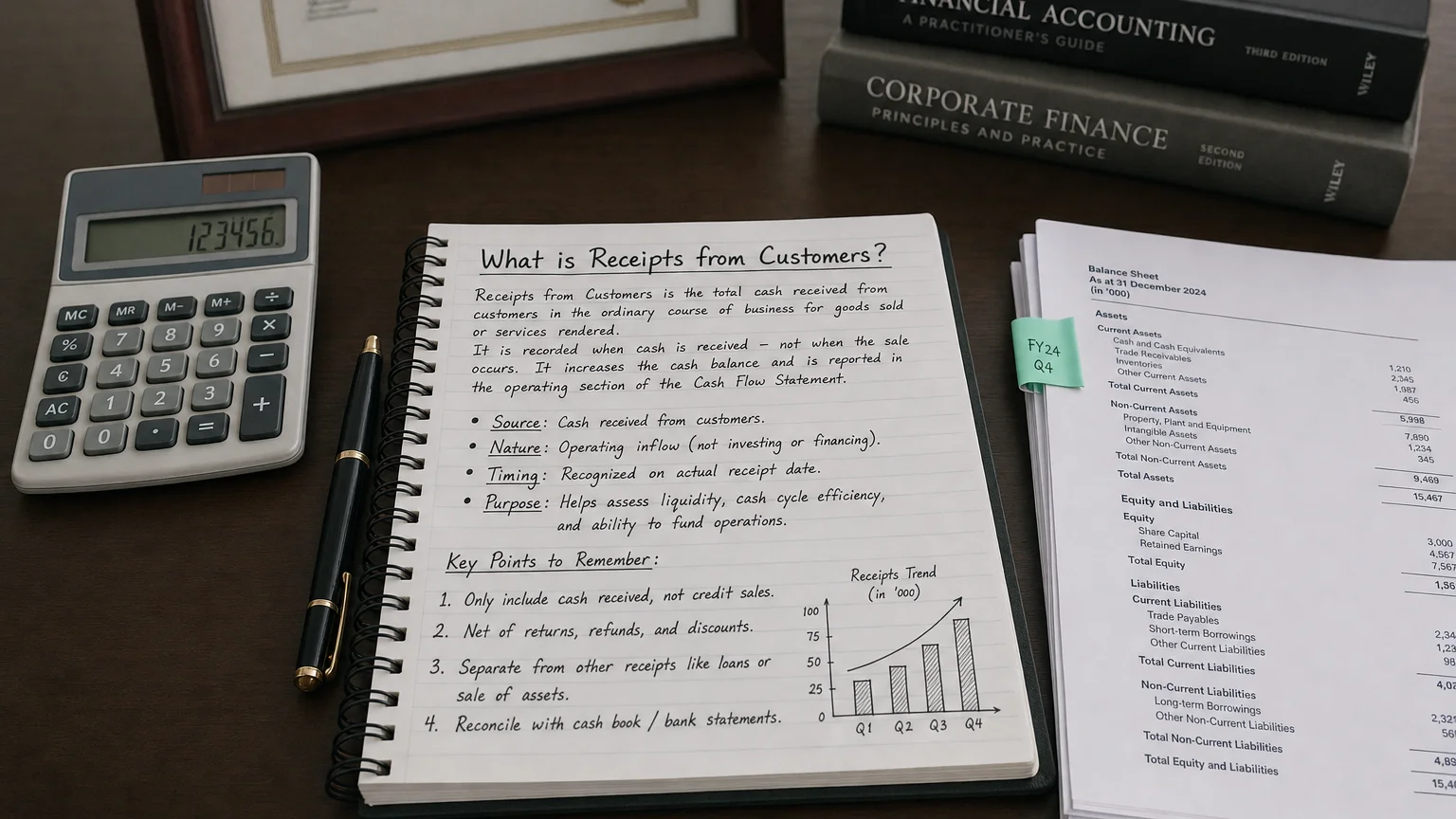
Receipts from Customers is a financial concept covered in this article. Cash Collected from Sales of Goods and Services
The intelligent investor is a realist who sells to optimists and buys from pessimists.

Receipts from Customers is the primary cash inflow line in the direct-method cash flow statement, representing the actual cash received from customers for goods delivered or services rendered during the period. It shows the real money coming in from core sales activities, separate from accrual-based revenue on the income statement.
What It Really Shows
Revenue on the income statement is when you earn the sale—goods shipped or service done. Cash might come later (credit) or earlier (deposits).
Receipts from customers is the cash that actually hit the bank from those sales—pure collections.
In the direct method, it’s usually the biggest single line in operating cash receipts.
Indirect method hides this detail—you only see the net effect via change in receivables.
“The intelligent investor is a realist who sells to optimists and buys from pessimists.”
— Benjamin Graham, Author, The Intelligent Investor The Intelligent Investor (1949)
A Simple Example
Company reports $1,200M revenue this year.
- Cash sales: $300M
- Collected from last year’s credit sales: $100M
- Collected from this year’s credit sales: $700M
- Receipts from Customers: +$1,100M
100M lower than revenue—working capital build.
Common Drivers of Differences
- Credit terms (longer = lower receipts vs. revenue)
- Customer payment speed
- Returns and allowances (cash refunded)
- Advance payments or deposits
- Seasonality (big Q4 sales collected Q1)
Where It Appears
Direct method operating section:
- ‘Receipts from Customers’
- ‘Cash Received from Customers’
- Usually the first and largest receipt line
Net with payments = operating cash flow.
Why It Matters
- True cash generation from sales
- Collection efficiency (vs. revenue growth)
- Working capital needs (receivables buildup?)
- Quality of revenue (cash backing)
- Liquidity from operations
What to Watch For
- Receipts < Revenue → growing receivables (credit expansion?)
- Receipts > Revenue → collecting past dues (strong collections)
- Trend vs. sales growth (matching?)
- Seasonal patterns
- Customer concentration risk
Consistently lower receipts than revenue can signal collection issues or aggressive revenue recognition.
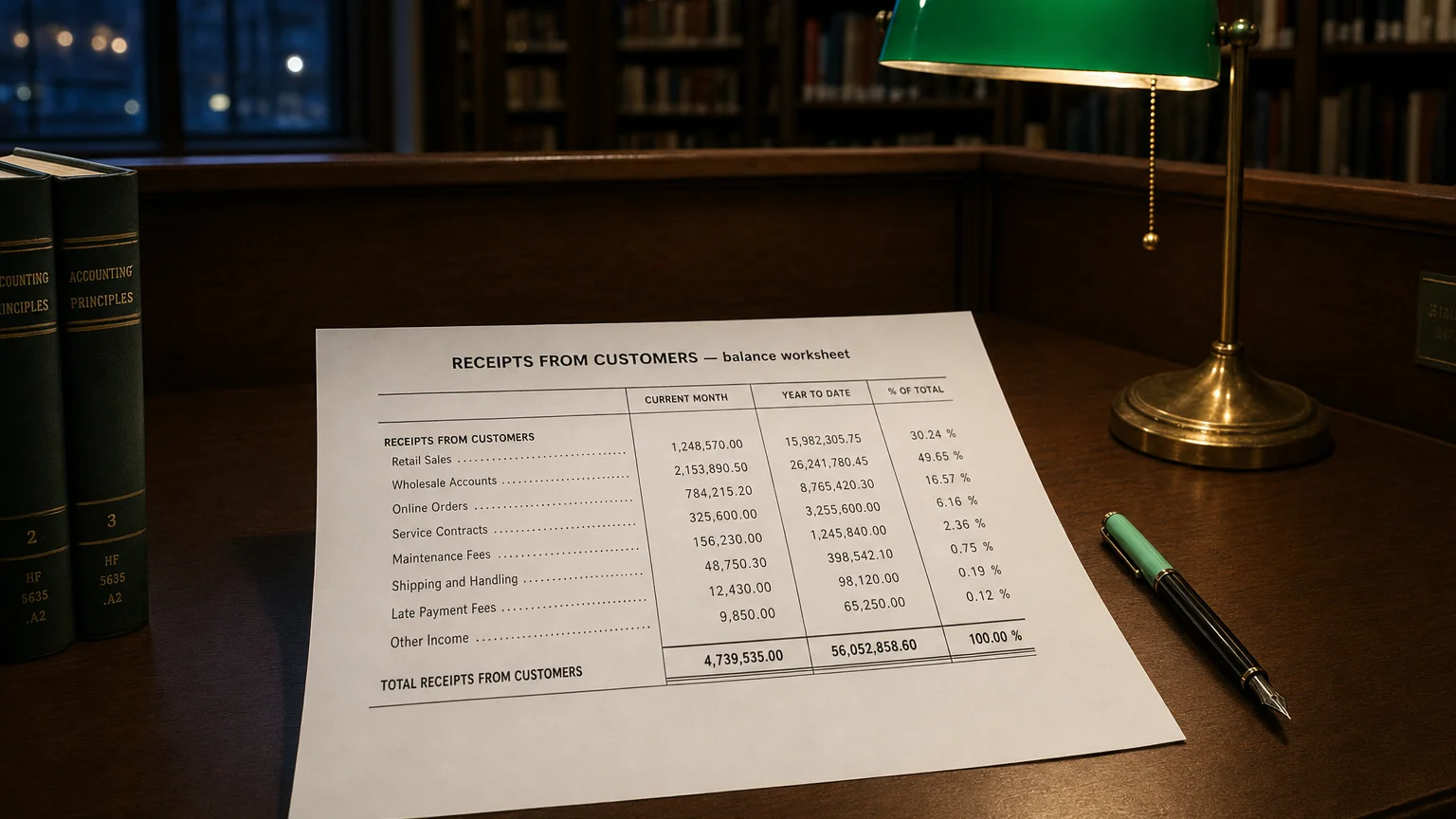
Q · 01 What is Receipts From Customers? +